

Bubbly, sparkling and refreshing summer drinks you dont wanna miss this season, the Elderflower Campagne and the Elderflower Cordial.
These drinks are easy to make and last a long time. I find it worth spending a little time picking some elderflowers to make these amazing drinks, not just for family but to impress a few friends.

The scent of this flower is pretty complex, bittersweet with a spicy note that makes you feel unsure. But then the sweet scent appears, followed by the lemony fresh spring burst that makes you want to sniff it again. It suits these drinks perfectly. Elderflower drinks are often sold at a high cost, but by wildcrafting, you can save money and have control over the ingredients.

I ventured to the nearby woods hunting for an elderflower tree.

The clustered bright white flowers made them easy to spot. You'll know it as you get closer because it emits its unique scent.

I managed to pick a few, enough to make the drinks.

This one is my last year's craft that I have just opened. A delightful and refreshing beverage with a sweet and floral flavor. Although it is a homemade, non-alcoholic sparkling drink, this last year's batch that I have just tasted has produced some percentage of alcohol, which gave me a little buzz!


Bubbly and refreshing!
To make elderflower champagne, you will need the following ingredients:
1.5 litres water boiled water
1.5 liter cold water
300 g sugar – granulated or caster
2 lemon
2 tbsp apple cider vinegar
8-10 elderflower heads
Here's a step-by-step guide .

Leave your elderflowers aside to let the little creatures run away or start by shaking the elderflower heads gently to remove any insects or debris. Avoid washing them, as this can diminish the flavor.

In a large container or bowl, place the elderflower heads and add the sugar.
Thinly slice the lemons and add them to the bowl.

Pour the boiling water over the elderflowers, sugar, and lemons, and stir well until the sugar is completely dissolved.

Add the cold water and vinegar to the mixture and give it another stir.

Cover the container with a clean cloth or plastic wrap and leave it to steep for 24 to 48 hours at room temperature.


After the steeping period, strain the mixture through a fine sieve, I re strain through a fine cloth. You can discard the elderflower heads and lemon slices.
Pour the liquid into sterilized bottles.

Seal the bottles with airtight caps or corks and store them in a cool, dark place for about 1 to 2 weeks to allow the fermentation process to occur. This will create carbonation in the beverage. It is safer to use plastic bottles to prevent explosions during fermentation.
After the fermentation period, move the bottles to the refrigerator to chill before serving.

When serving, you can pour the elderflower champagne into glasses and enjoy it as a refreshing non-alcoholic beverage.
Remember to be cautious when opening the bottles, as the carbonation can cause them to pop. It's a good idea to release the pressure slowly by slightly opening the cap or cork before fully removing it.
🥂🥂🥂🥂🥂🥂🥂🥂🥂🥂🥂🥂🥂🥂🥂🥂🥂🥂🥂🥂🥂🥂🥂🥂🥂🥂

Elderflower Cordial
Ingredients:
30 elderflower heads
1.5 liters of water
1.5 kg of granulated sugar
3 lemons
50 grams of citric acid (available at some grocery stores or online)
I purposely made this elderflower cordial concentrated, it last longer and you'll only need a small amount to add in your water, I like using sparkling water as it is more refreshing and satisfy your querch.

Th procefdure is the same as making elderflower champagne except you need to stir in the citric acid, which acts as a preservative and adds a tangy taste. Citric acid is often available at specialty stores or online. If you can't find it, you can omit it, but the cordial may have a shorter shelf life.

Pour the cordial into sterilized bottles or jars, and seal them tightly. Store the bottles in a cool, dark place. The elderflower cordial can be refrigerated and should keep for several weeks.
To serve, dilute the elderflower cordial with still or sparkling water according to your taste. You can also use it as a flavoring in cocktails or desserts. Enjoy your homemade elderflower cordial!
💚💚💚💚💚💚💚💚💚💚💚💚💚💚💚💚💚💚💚💚💚💚
What is Elderflower?

Elderflower refers to the flower of the elder tree (Sambucus genus), specifically the European elder (Sambucus nigra) or its closely related species. The elder tree is a deciduous shrub or small tree that is native to Europe, but it can also be found in various parts of North America and other regions of the world.
The elderflower is known for its delicate and aromatic blossoms, which appear in large, flat clusters called umbels.
The flowers have a creamy-white color and a distinctive sweet, floral fragrance. They typically bloom in late spring to early summer, depending on the specific region and climate.
Elderflowers have been used for centuries in culinary and traditional herbal remedies. They are known for their unique flavor profile, which is often described as floral, fruity, and slightly musky. The flowers are commonly used to infuse beverages, such as elderflower cordial, wine, and champagne, as well as to flavor desserts, syrups, and teas.
In addition to their culinary uses, elderflowers have been valued in traditional medicine for their potential health benefits. They are believed to have anti-inflammatory, antioxidant, and immune-boosting properties. However, it's important to note that more scientific research is needed to fully understand and confirm these potential benefits.
Overall, elderflowers are cherished for their fragrant and versatile nature, adding a delightful and unique flavor to various culinary creations.
Identifying elderflowers can be relatively straightforward once you become familiar with their distinctive characteristics. Here are some key features to look for when identifying elderflowers:

Flower Appearance: Elderflowers grow in large, flat clusters known as umbels. Each individual flower has five petals that are joined at the base, forming a saucer-like shape. The flowers are typically small, measuring around 5-6 millimeters in diameter.
Color: The flowers have a creamy-white or off-white color. The petals are often translucent, and the flowers appear in dense clusters, creating a visually striking display.
Fragrance: One of the most notable characteristics of elderflowers is their sweet and fragrant aroma. The scent is often described as floral, fruity, and slightly musky. Take a moment to inhale the fragrance when you come across a potential elderflower.
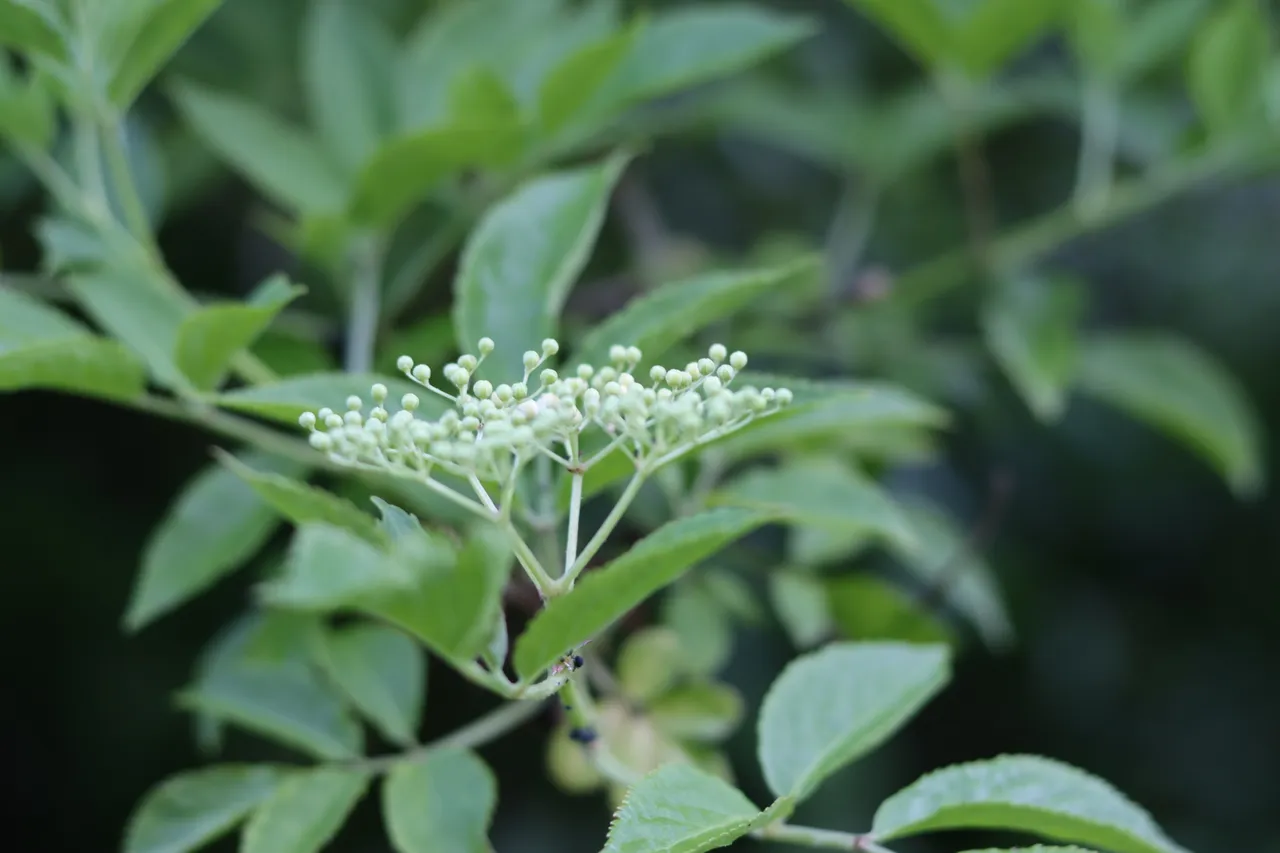
Leaf Arrangement: Elderflower blooms emerge from opposite leaves that are compound, meaning they have multiple leaflets arranged along a central stem. Each leaf typically consists of 5-9 leaflets, depending on the specific elder tree species.
Leaflet Appearance: The leaflets are oval or lance-shaped with serrated edges. They have a deep green color and a slightly matte or dull texture. The leaflets are arranged in an alternating pattern along the central stem.
Habitat: Elder trees are commonly found in hedgerows, woodlands, meadows, and along the edges of fields. They prefer moist, well-drained soil and are often seen in temperate regions.
When identifying elderflowers, it's essential to note that there are different species of elder trees, and some may have slight variations in flower appearance or leaflet arrangement. However, the overall characteristics mentioned above should give you a good starting point for identifying elderflowers accurately.
If you're uncertain about your identification, it's always best to consult a reliable field guide or seek assistance from an experienced botanist or local plant expert who can help you confirm the identification.
Hope you like the information about the Elderflower.
Have a wonderful day!
Mariah🍃💚