

As I mentioned last week, today I'm starting a series called Buenos Aires Museums. After making a list of the museums I've visited in the Argentine capital and identifying those I've already shared with you here, the hardest part was choosing the order in which to publish the following ones. Which one would I show you first? Given the variety of collections, some more modern and others more interesting, it wasn't easy to choose which would be the first place I would show you, but after thinking about it a bit, I found that this was the most logical way to start this series.
Tal como lo indiqué la semana pasada, hoy arranco una serie llamada Museos de Buenos Aires. Después de hacer la lista de los museos que he conocido de la capital argentina y de identificar aquellos que ya les había compartido por acá, lo más difícil fue escoger el orden de publicación para los siguientes, ¿cuál de todos mostrar primero? Dada la variedad de colecciones, algunas más modernas y otras más curiosas, no fue fácil elegir cuál sería el primer lugar que les mostraría, pero después de pensarlo un poco encontré que esta era la forma más lógica de dar inicio a esta serie.

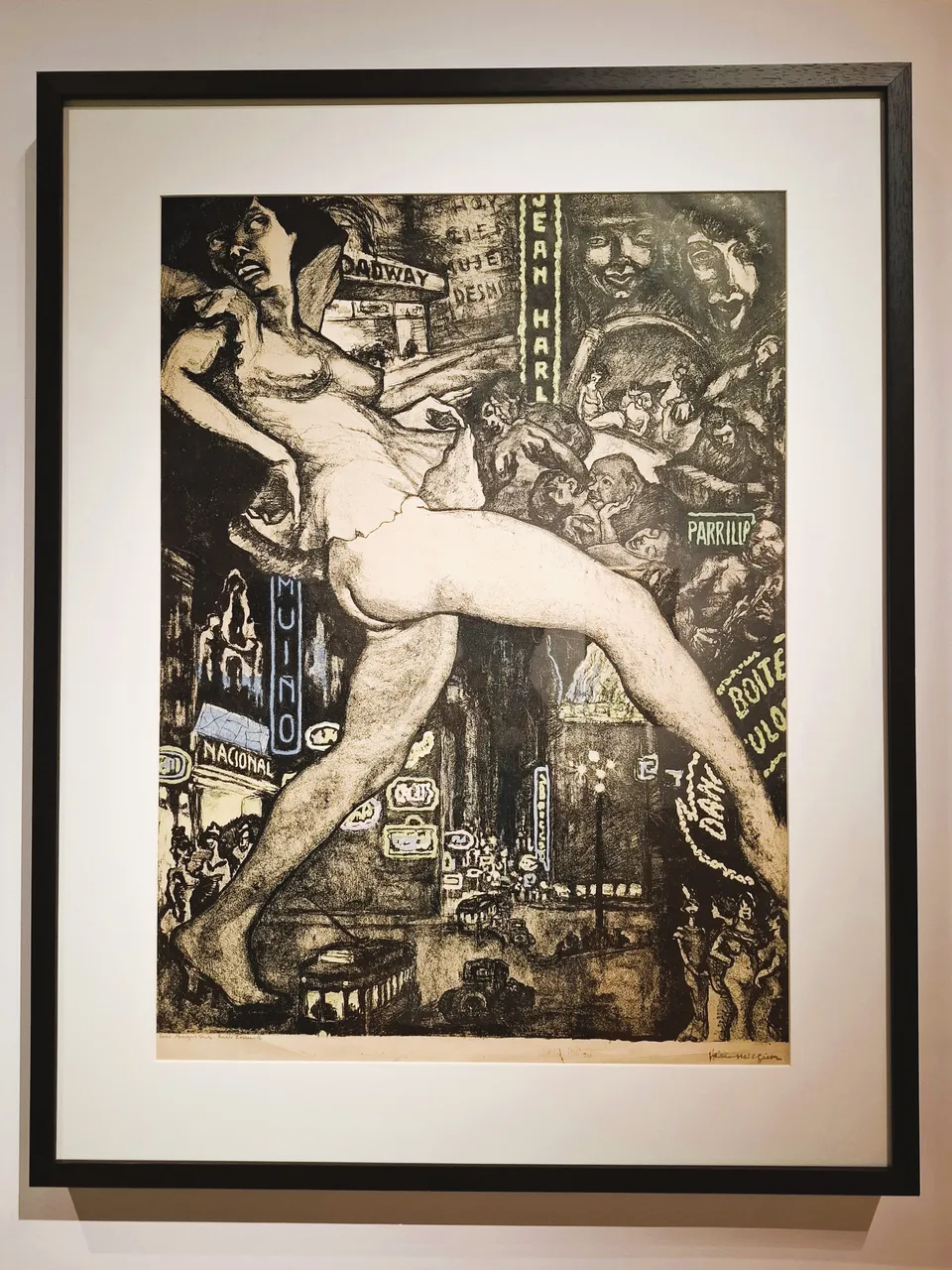
Let's say you want to walk from the Japanese Garden in Buenos Aires to the iconic Floralis Genérica, next to the UBA Law School. My recommendation would be to walk along Avenida Figueroa Alcorta. Halfway between the two, you'll come across Plaza Perú and, to one side, the already recognizable façade of the Museum of Latin American Art of Buenos Aires (MALBA by its acronym in Spanish). This is a cultural site and one of the newest museums in the city, having been founded in 2001. Hence, its more modern façade than other museums in Buenos Aires, and that modernity is also reflected in its collection. During my visit, which lasted between two and three hours, I was able to see paintings, sculptures, prints, projections, videos, interventions, and photographs, ranging from black and white to the most colorful, from the minuscule to the immense, and from the most classical to the most abstract avant-garde. In that sense, compared to other museums, MALBA's collection is quite heterogeneous, and while some might point to this fact as condemnable due to a lack of uniformity, I believe it is, on the contrary, a plus: with so many diverse works, anyone who visits is likely to find something that catches their attention and prompts them to contemplation and reflection, which, ultimately, is the intention of any work or collection of art.
 |  |
|---|
Supongamos que quieren ir desde el jardín japonés de Buenos Aires hasta la icónica Florarlis Genérica junto a la facultad de derecho de la UBA. Mi recomendación sería que caminaran por la Avenida residente Figueroa Alcorta. A medio camino entre ambos lugares se van a encontrar con la Plaza Perú y a un lado la ya reconocible fachada del Museo de Arte Latinoamericano de Buenos Aires (MALBA). Se trata de un sitio de interés cultural y uno de los museos más nuevos de la ciudad, ya que fue fundado en 2001. De allí que tenga esa fachada más moderna que otros museos de Buenos Aires y que esa modernidad se refleje también en su colección. Durante mi visita, en la que me demoré entre dos y tres horas, pude ver pinturas, esculturas, grabados, proyecciones, videos, intervenciones, fotografías, que iban desde el blanco y negro hasta lo más colorido, desde lo minúsculo hasta lo inmenso y desde lo más clásico hasta la vanguardia más abstracta. En ese sentido, comparado a otros museos, la colección del MALBA es bastante heterogénea y si bien alguien podría señalar ese hecho como algo condenable debido a falta de uniformidad, creo que, al contrario, es un plus: con tantas obras tan diferentes, lo más seguro es que cualquier persona que lo visite encuentre algo que llame su atención y que lo llame a la contemplación y a la reflexión, lo que a fin de cuentas es la intención de cualquier obra o colección artística.
 |  |
|---|---|
 |  |
It's true that the museum focuses on Latin American artists, but they also temporarily house works by artists from other corners of the world. The time I went, I was able to see several exhibitions by Asian and European artists, with a slightly more modern perspective than what I perceived in the Latin American works in the museum's permanent collection. Overall, these works made me think—among other things—about the passage of time, the origins of our peoples, pop culture, industrial design, and the possibilities of human biology, which in the future could be modified to levels unthinkable today.
Es cierto que el museo se concentra en artistas latinoamericanos, pero también albergan temporalmente obras de artistas de otros rincones del mundo. La vez que fui pude ver varias exposiciones de artistas asiáticos y europeos, con una mirada un poco más moderna que lo que percibí en las obras latinoamericanas de la colección permanente del lugar. En conjunto, eran obras que me hicieron pensar - entre otras cosas - en el paso tiempo, los orígenes de nuestros pueblos, la cultura pop, el diseño industrial y en las posibilidades de la biología humana que en un futuro podría verse modificada a niveles hoy impensados.

One of my favorite works was a white sculpture that appeared to be two carnivorous plants, but in fact depicted an argument between two people. Those violent, threatening, punch-like lines could have been arguments or hurtful words, and the sculpture's design, as well as its dimensions, seemed ideal for conveying that powerful message. I also really liked the building, which also houses a movie theater with screenings from Thursday to Sunday, a restaurant, meeting rooms, a shop, a design department, and a café on an outdoor terrace where I had a snack that afternoon while reading a little after my visit. MALBA is open Wednesday through Monday from noon, and general admission is 9,000 Argentine pesos (just over $6 USD today), half price on Wednesdays, and with different promotions for different groups such as students and retirees, among others. This entire area of Buenos Aires, between Palermo and Palermo Chico, is full of beautiful places. Gardens, cafes, restaurants, plazas, museums... it all depends on how much time you spend in the Argentine capital and which area you're staying in, but I would recommend spending several days walking these streets and, of course, including MALBA in your itinerary to better understand the locals' relationship with world art and culture. Have any of you had the chance to visit this place? What's your favorite museum in the Argentine capital? I'll read you in the comments.
 |  |  |
|---|---|---|
 |  |  |

Una de mis obras favoritas fue una escultura blanca que parecían ser dos plantas carnívoras, pero que en realidad representaban una discusión entre dos personas. Esas violentas líneas amenazantes como punzones podían ser argumentos o palabras hirientes y el diseño de la escultura, al igual que sus dimensiones, me parecieron ideales para trasmitir ese poderoso mensaje. También me gustó mucho el edificio que además alberga una sala de cine con funciones de jueves a domingo, un restaurante, salas para reuniones, una tienda, un departamento de diseño y una cafetería en una terraza al aire libre en donde me tomé una merienda aquella tarde mientras leía un poco después de mi visita. El MALBA está abierto de miércoles a lunes a partir de mediodía y la entrada general tiene un costo de 9.000 pesos argentinos (poco más de 6 USD al día de hoy), a mitad de precio los días miércoles y con diferentes promociones para distintos grupos como estudiantes, jubilados, entre otros. Toda esa parte de Buenos Aires, entre Palermo y Palermo chico, está repleta de lugares hermosos. Jardines, cafeterías, restaurantes, plazas, museos... va a depender de cuánto tiempo pasen en la capital argentina y en qué sector de ella se alojen, pero yo les recomendaría caminar varios días por esas calles y por supuesto incluir el MALBA en su recorrido para entender mejor la relación de los locales con el arte y la cultura de mundo, ¿alguno de ustedes ha tenido la oportunidad de ir a este lugar? ¿cuál es su museo favorito de la capital argentina? Los leo en los comentarios.

Other posts that may interest you | Otros posts que pueden interesarte:
 |
|---|