

The traffic jam is about a kilometer or two away from the parking. It is just after 6 am and there are already people leaving the farmers' market. Talk about dedication. For those who are not accustomed to the early mornings, this experience is surreal. I know I am sleeping my life away as someone might say in a negative sense, but getting up at 5 am to visit a farmers' market is not my idea of spending a morning.
Alas, here I am, visiting the Pretoria Farmers Market and I am taking you on a virtual tour with me! The main focus of this post will be on showing you how these enclaves still keep traditional food alive. Some of these foods my parents and their parents grew up eating on a weekly basis. For us modern youth/millennials, and being part of a global economy and so on, we are detached from these roots. If this is a good or bad thing, one might not easily answer. For now, please enjoy whilst I take you on a strange Afrikaans culinary tour at one of the many farmers' markets!

Early Morning Traffic
I could not believe how many people were already driving home. It is just after 6 am and I did not have my coffee yet, but people already bought everything they wanted and headed home. We sat in some traffic for about 20 minutes just to get in. I craved coffee and I already smelled the food cooking.
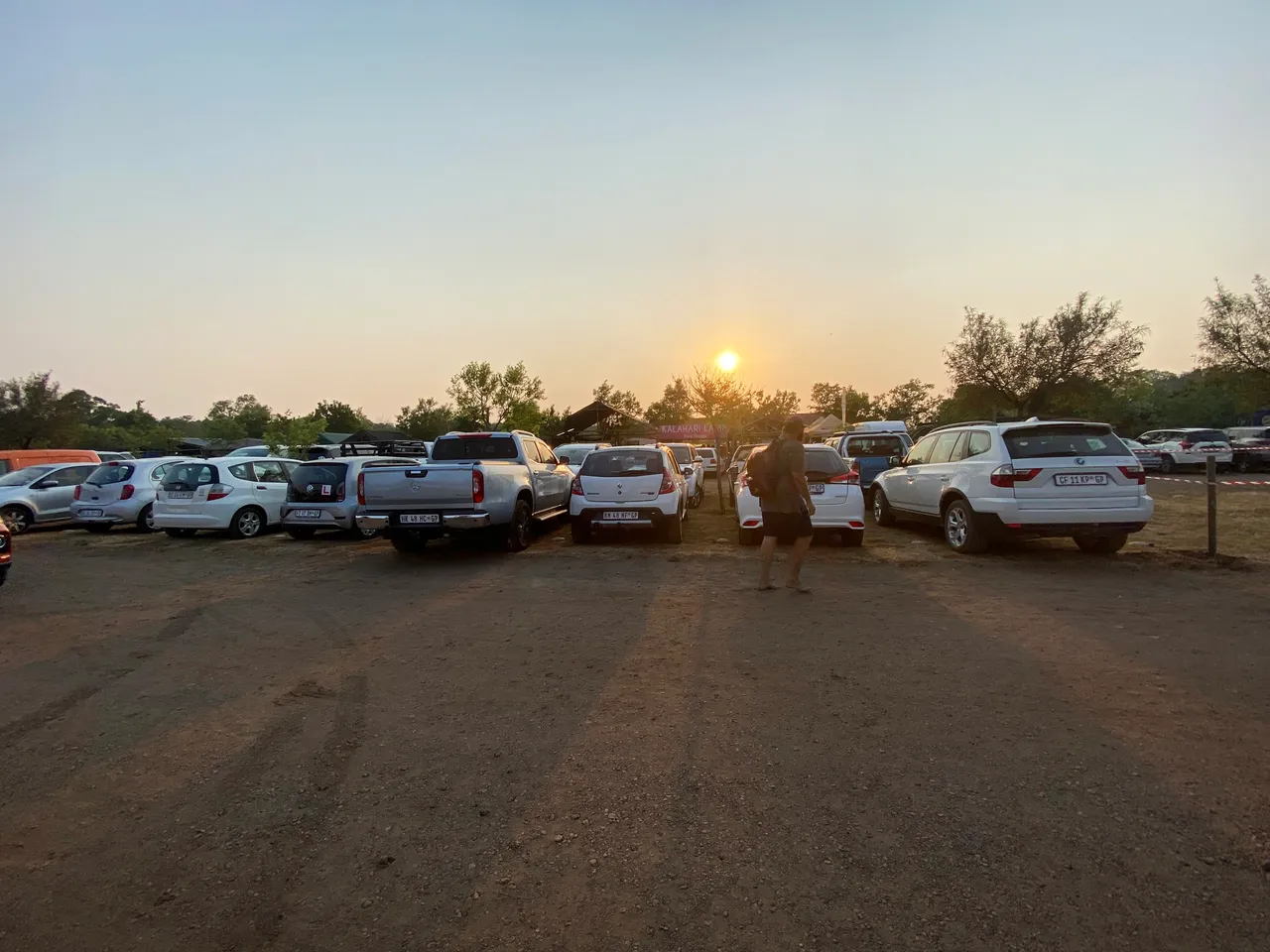
The sun is just above the horizon and it is already warm: the summer is here and it is only spring. What a morning, there is just something else when the sun has just risen.

There is something nostalgic about these places, even though I am a "new youth" cut off from the past to which I am yearning. Maybe the concrete jungle is not meant for me.
As enclaves to a long-lost past, these farmers' markets keep traditions alive.
What and whose tradition? That is a topic for another more political post. For now, it is enough to say that it keeps a tradition alive in which my parents and their parents grew up. And somehow without having the historical exposure, I am trying to keep it alive in my own ways as well.
Grabbing a Coffee and Reminiscing

There are so many coffee stands.
Maybe the trick to making money at these farmers' markets is to sell coffee.
With the first coffee in, we started to walk through the many different stalls. Every person there tries to make a living from what they produced themselves. These enclaves might also act as some last resistance to the big conglomerates of supermarkets and stores. "Fresh from the farm" one stall reads. How fresh can your product be if you need to sell it in a supermarket miles away? Versus, how fresh is the produce straight from the farm?

And so, everyone just tries to survive, in our changing and strange times, people are doing what they can. Selling bread or coffee or even eggs from the farm.

And in doing so, people are also trying to preserve their culture or traditions. One aspect of this is through language. In this post, you will see how most of the boards and banners are in Afrikaans. I do not want to dwell in the politics in this post, suffice to say that it is not a language without its own political history.
Preserving Traditional Foods
The first thing you need to get at these farmers' markets in South Africa is what we call Pannekoek. Directly translated, it means "pan cakes". But it is more of a french crepe. Thin dough with way too much cinnamon sugar, it is a delight few will experience outside the borders of South Africa. And what is always special, it is mostly made by old sweet ladies who have been doing it for years and years.
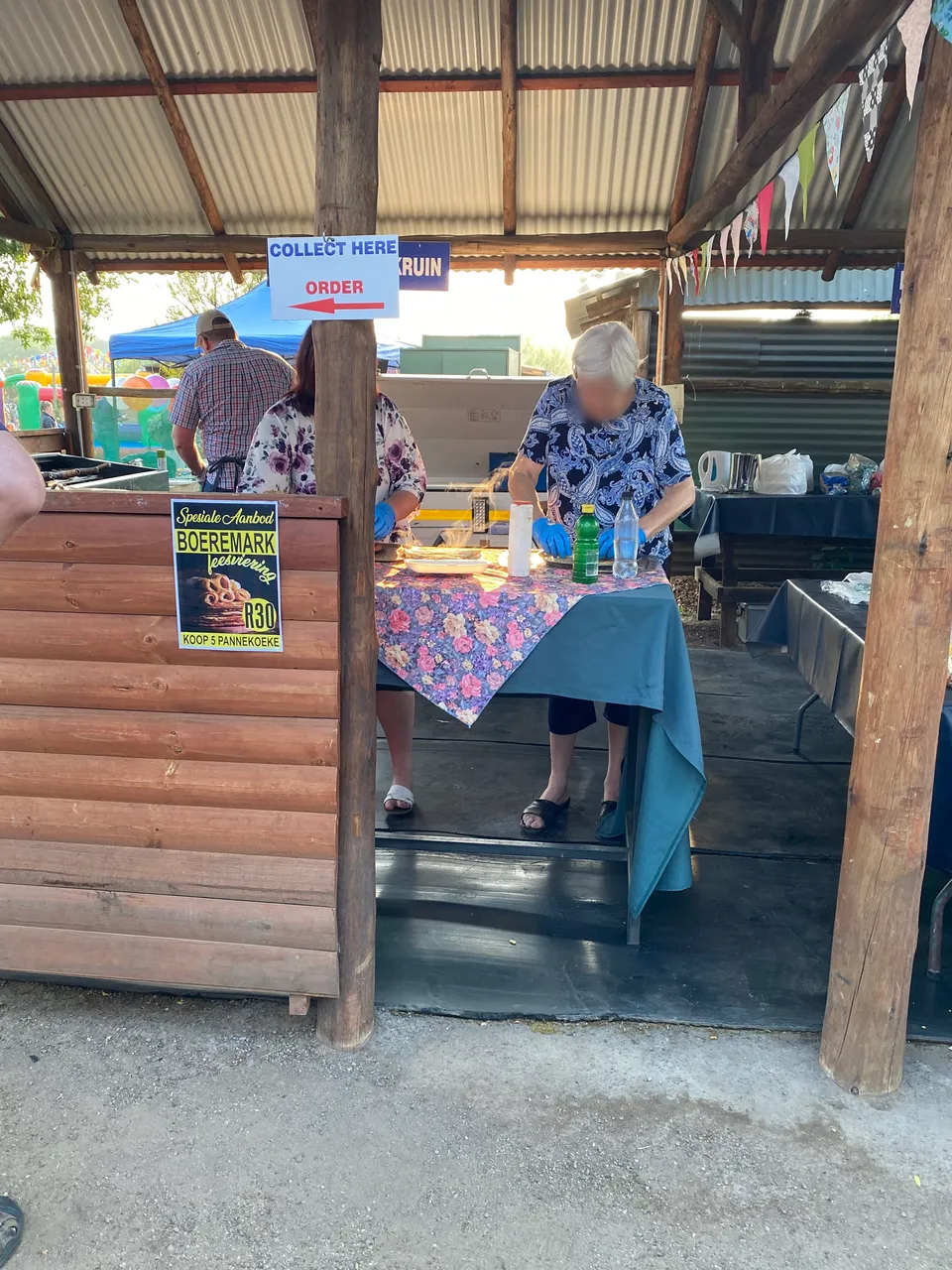
I always feel sorry for them though, standing on their feet for hours on end. Alas, as mentioned, people are just trying to make ends meet.

Another South African delicatessen is what we call Beskuit or in English, rusks. Essentially dried-out bread, it is a staple with coffee for most South Africans. Every grandmother or mother has her own recipe and some will not even share that recipe. But as you can see in the above picture, there is plenty to go by! But with those rusks, you need some real black coffee, or as we would say in Afrikaans Moer Koffie.

Also referred to as Sak Koffie this is as traditional as it gets. Moer in Afrikaans refers to the spent coffee grains, and Sak refers to the bags they brew the coffee in. I could not snap a picture of all the coffee cans and bags being used as so many people wanted to buy some of this coffee. Again, suffice to say that it is totally different from normal coffee the western coffee drinker is used to. This is coffee my granddad grew up drinking.

Another food that is only locally known is what they call Melkkos, translated to milkfood. Also one of those food sorts in which everyone has their own recipe and memory, this is essentially milk thickened with flour. Some people add pasta to it, some people only add cinnamon sugar, but as the banner reminds us it is lovely warm remember food.

From afar you can smell it. Someone is making Pap en Kaiings or porridge and pork crackling. I sometimes make my own fat spread/lard from leftover pork fat and the smell is ingrained in my memory. Not the best smell 6 am in the morning if you are not used to it. But this traditional food is eaten by many of the older people.
So also offal or organ meat....

This stall is selling Skaap Afval en Skilpadjies, or sheep offal and lamb liver wrapped up in caul fat. Again, not something the modern westerner is used to, and neither am I. My parents never offal or anything in that line. But I know people who cannot live without it.

Back to my favorite, the sweet things. These are called Hertzoggie and they are essentially coconut icing on top of apricot jam in a dough/pastry cup. For the South African mouth, this is history in a bite. I always think about my grandmother when I take a bite.

And lastly, another staple food for us, Vetkoeke, or the very funny direct translation: fat cakes. Essentially bread dough deep fried, we split the end product open, add some jam and minced meat. Something most Afrikaans kids grew up with till this day.
The Last Rooster to Rule Them All
It would not be a farmers' market without some chickens yelling.

I took out my camera to take some nice photographs of this rooster and some other things. To the urban explorer, the sound of a rooster in the early morning is not that nice.

We also saw some small piglets. They were so energetic and cute.

Most people could not resist feeding and petting them.

Postscriptim, or Now We Eat at the End of a Too Long Post

This post grew very long very quickly. I hope you enjoyed it if you read it all! This is another yummy food/snack we always buy: chip stix. Crispy potato lather in whatever spice you fancy.
I hope you enjoyed this post, a culinary virtual journey of traditional foods you do not see outside of these farmers' markets. On the one hand, it is a shame that traditional foods get lost, but on the other hand, the modern palate changes as time changes.
All of the photographs are my own, taken with my iPhone or Nikon D300. All of the musings are also my own. Safe travels!