
Gooday Hive!
I thought I should show some signs of life and blow some of the dust on the remains of my Jasper trip. That's kinda where it started going a bit sideways for us, why I'm reluctant to post but I will anyway, we still had fun under the circumstances. A few weeks ago I slammed my fingers in a spring loaded door (ouch)..more like the door slammed on my finger but it's been out of commission since. Luckily nothing is broken and it still moves but I seriously messed up that nerve and typing has been hard until today, it's going much better now. Speaking of slamming extremities, this part of the trip is when 

Good news, he didn't need that foot for driving, bad news, puts a bit of a damper on hiking plans. We don't think anything was broken but we weren't sure at that point, here in Alberta, they don't do anything for broken toes anyway besides tell you that they will now be crooked, there really wasn't any point wasting time at the hospital. Defeated by his suitcase, we chose to do a mostly driving day, we hustled pretty hard the day before with our Sunwapta Valley discoveries and were all stiff and sore anyway. Everything was overcast and dull again and seems like it was the case thru out the park, there was no escaping to a blue sky near us this time around...not for a couple of days at least.


On the way to town or anywhere near, we always passed in front of an airport but never paid much attention to it because it's nothing but a field , I'm usually looking for Elks here, not airports. We only intended to park here for a min while we looked on the phone to find some information for breakfast and see what was there, I was surprised to find the local airport. Turns out there is actually an entire network of easy flat trails, a river bank and summer camp type activities and hiking clubs hiding in plain sight. Our "no hiking" plan and our breakfast vanished into thin air instantly and we painfully headed out into the field following the trail towards the river.


This area is considered Jasper's last Grassland and suddenly I realized how I had been taking this underwhelming looking area for granted for almost a decade and how precious it really was to the local landscape. Grasslands make up around 1% of Jasper's territory yet is an essential eco-system under the biggest threat of alteration and degradation from human activity. Being the last place to be covered in snow and the first to thaw in the spring, it supports a diverse range of species form plants to animals large and small, insects, rodents and many will feed here over the winter and rely on these grasslands to survive our harsh northern conditions.

The Jasper National Park terrain is classified in three categories or called "Life Zones" that is distinguished by food availability or growing zones and life forms. The Harshest is the Alpine zone found near the Columbia Icefield where it may take 50 years for a tree to grow only a couple of feet tall mostly barren landscapes and rocky terrain or glaciers unfit for any long term occupation to anything bigger than a rodent. down to the Sub-Alpine region where mostly spruce and pine species can be found, some animals that prefer the hills and can digest rough foliage like moose or Mountain Sheep can be found here safer from their predators that prefer the Montane region. Most animals, plants and humans alike prefer the Montane region's abundance and a more temperate climate along with ease of transportation or movement the valley offers compare to the rocky slopes.


This region is where you will find the 200 year old fragrant Douglass Fir forest that is normally associated with Jasper along with abundant grasslands. This is the best place to have an opportunity at a wildlife encounter. Grizzly's roam for their favorite Buffalo Berries where many are spotted with cubs, Elk graze here all day or run in large herds, Wolves, Deer, Prairie Dogs...the list goes on. Keep safe distances suggested by the park for each animal and remember, you are safer inside your vehicle but if you have a sunroof, then you can have the best of both worlds. If you ever come thru here and rent a vehicle to travel, look for that in the options!


While hiking in such regions, it's good to have a bear bell or make some noise to alert wildlife of your presence along with bear spray in the event of an aggressive encounter on the trail especially the less travelled ones. For the most part, many prefer to avoid humans and we stress them but the occasional attack does happen and can result in death. They may be cute and fluffy but only from a distance.


We had no idea where we were headed, we just kept walking to the tree line until we could see a river, ahead was a patch of burned trees in the process of falling in-between. The place was still accessible but caution had to be taken around the unstable trees and be extra careful of overhead hazards as some were already fallen and resting on other weak burned remains. We tried to access the river but it was too steep so we continues walking along the ridge for a few kilometers. Not too much to report, this was fall. Some snow covered the ground, different species of winter berries could be found. The charred remains added a bit of color and texture to the dull grey sky. I didn't get too much for photos because of the clouds and lighting.


It was nothing spectacular or too picturesque besides the golden fields but it was a really easy and slow paced walk especially with


After a few hours delay, we eventually made it to breakfast at 3 pm 😂 and figured they day was coming to a close and we had already done more hiking than anticipated today, we decided to just drive around on different roads exploring for other future lakes to visit. All day, we could smell campfire from a distance, we assumed it was from one of the lodges but we came across something different and had a chance to learn a thing or two about the fire suppression methods employed for the safety of visitors. During the shoulder/ off season is where much of the park safety maintenance and background operations take place. Towards the end of the day, we were able to flag down someone in charge and asked if he would educate us on what was going on. I'm telling you my friends, any questions you have here, everyone is happy to talk about what they are doing to help preserve the park or just knowledge in general, everyone is friendly and will take the time to educate any curious minds, most of them love it actually, there is a lot of passion for this place from the locals.

We located the source of the campfire smell with our encounter of a team cutting/clearing the dead trees and left over tree carcasses left behind by Pine Beatle damage. Many lakes and popular tourist attractions have one narrow way in and out and are mostly forested but this leaves behind to much dry tinder to let nature take it's course, it becomes a hazard and a tragedy waiting to happen. Of course it's a danger present across the park including the wilderness but it would be impossible to reduce the fire hazard everywhere while maintaining the integrity of ongoing ecological studies so the park's crews focus their efforts on keeping major evacuation routes clean of forest debris by cutting down dead trees into firewood and controlled burning of the un-usable parts and branches.

How does this practice create a safer escape route in the event of a fire and can potentially save an eco system? The answer is simple really, dry tinder burns hotter than a live tree along with being an obvious fuel source, a live tree has more moisture, will likely get injured from a wildfire but the chances of survival is better if the fire's intensity is lower and slows the spread giving people time to scape and specialized crews to respond if able to safely attempt to contain. By reducing the heat of the fire by clearing debris, a wild fire does not always completely destroy the eco system allowing the animal species reliant to come back sooner for faster regeneration. As destructive as a fire can be, it also releases seeds from pine cones that encourages new growth to keep a healthy cycle of trees. Given that Jasper is the host of many endangered species, it's not always possible to keep the life cycles completely up to nature so fire prevention and suppression has been high on Jasper's priority list.
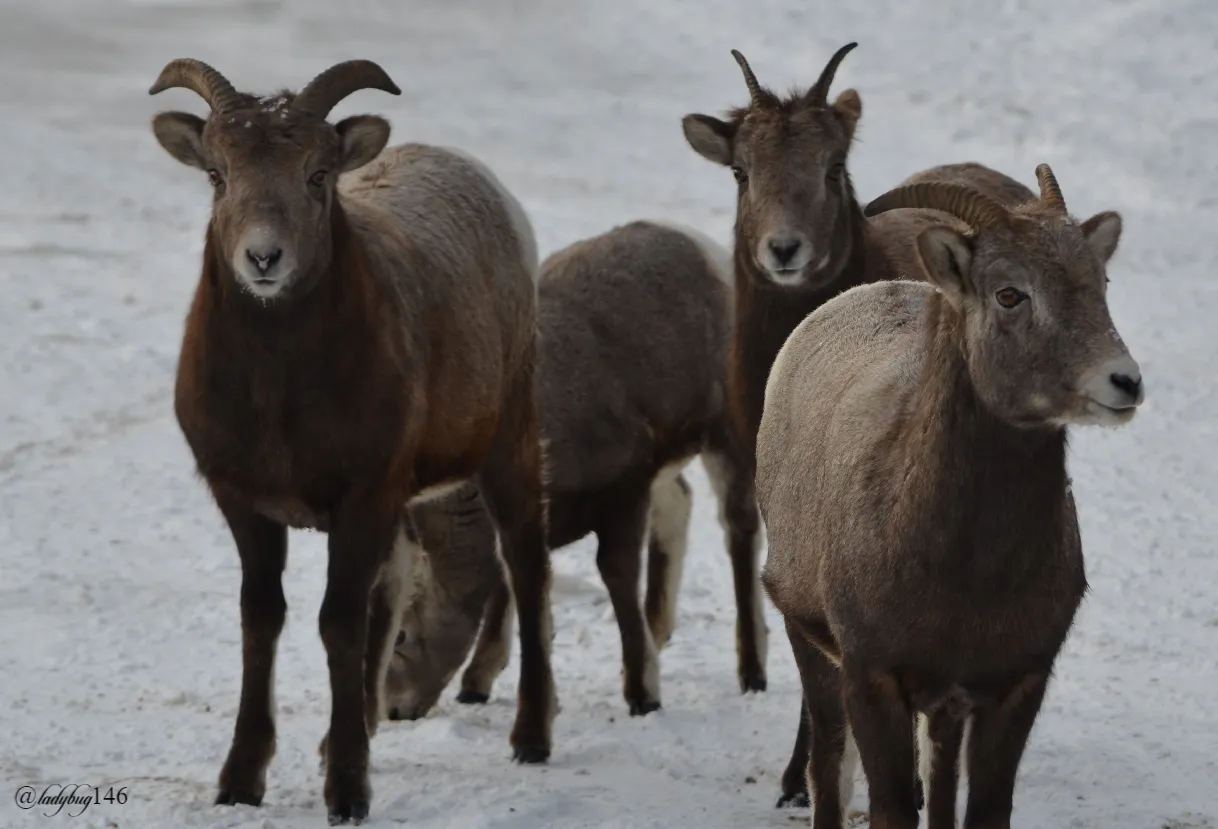

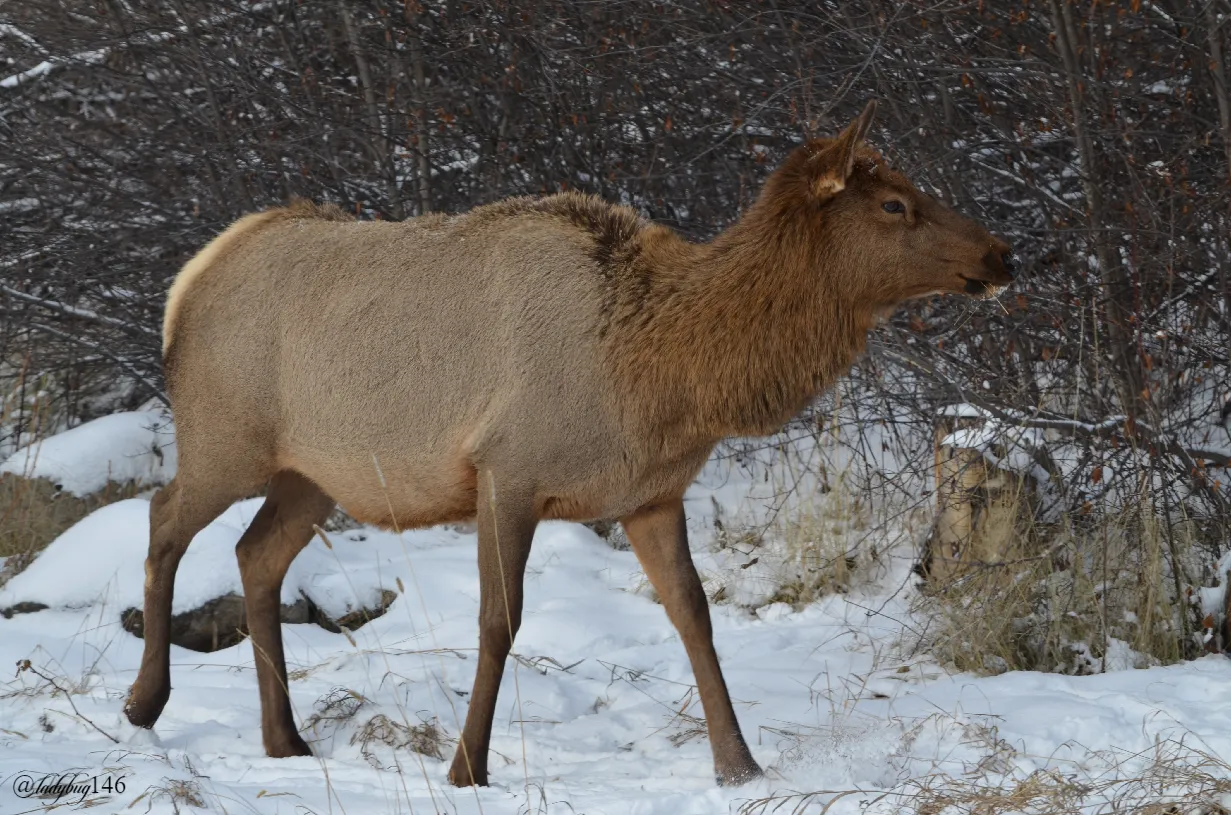
Just about getting into town, we spotted a few elk and some mountain sheep having a bit of a get together. e had space to pull over and watch. I was curious if the mountain sheep would climb the hill and go mingle with the elks, and maybe try to catch a picture of them together. It did come close but I was tired of waiting, they seem to have a juvenile with them and I'm not sure about the dynamics between the 2 herds. At least we caught a little bit of wildlife today, just surprising it wasn't while hiking in the field.


That pretty much wraps up the exploring for the day as daylight was in short supply but perfect time to explore the town...or what's left! 😲. Don't worry, it wasn't that bad. Covid-19 did put a damper on things and the town is more quiet than usual but compared to Banff, more businesses seem to have survived but only because they chose to reduce days in operation. During our visit, most things in town were closed Sunday to Wednesday with only a few essentials or big chains open. Things change fast, it could have changed by now.


One of my favorite aspect here is the food culture and local brews, I hardly ever drink but there is a nice variety of local brews worth tasting for any beer enthusiast. Many places most travel to is filled with high end chains serving a standard menu, here...the standard is wilderness. Many restaurant serve an array of wild local table fare both from the land or the lake, some from the sea (obviously a bit less local) served with locally grown and inspired side dishes. Our traditional meats include elk and bison at the top of the list, venison, bear, grouse, boar, moose. Most fish served in restaurants will be imported from the artic and still of high quality. It makes navigating thru my allergies pretty easy since every chef can tell me exactly what is in their food including deserts. What I can have desert too?? Oh my, now I'm impressed!

This gem of a place called Fiddle River Restaurant that we found blew my mind with their upscale yet relaxed romantic mountain atmosphere with a smaller menu than normal but every dish was so well designed and executed that a smaller menu wasn't even an issue, I wish I could have tried everything and got disappointed when I realized I couldn't fit anymore food in my body. The restaurant is on the second floor with a view of the street below, the food is completely handcrafted from carefully selected top quality ingredients and still offered their food for a fair price. At first I felt a little awkward with my hiking clothes in such a fancy place but I soon noticed everyone else was mostly dressed the same so I quickly cozied and forgot about it.
We went twice actually, it was that good. The first day we didn't eat much because we had breakfast at 3 PM! The second time, we saved room and really feasted and still came under $120 cad for our meal, for around here, that's pretty reasonable for the quality and variety we received. The first time, I had fish and chips because that's generally a safe option for me at restaurants to prevent going into anaphylactic shock for unintentional contamination, 

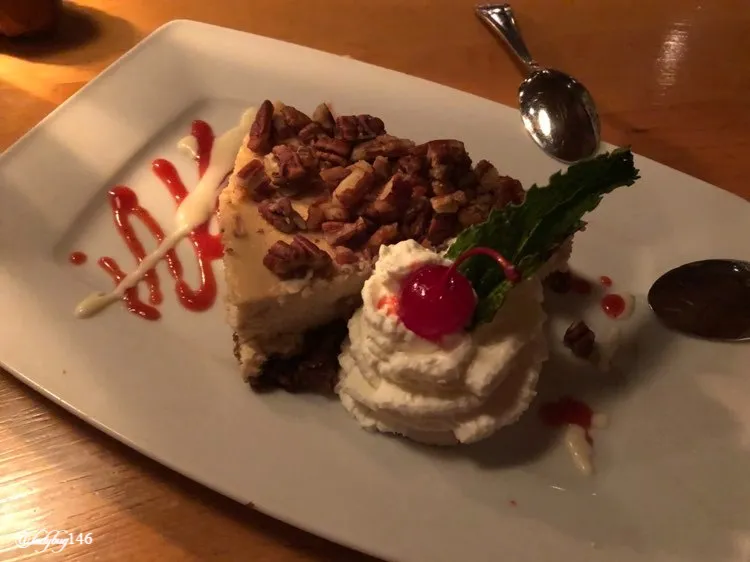
The next day, we had our breakfast and beavertail early (keep reading, I'll explain in a bit) and went to town on that menu, like literally. He ordered some sort of 5 meat sausage pasta dish with 5 different types chunks of sausages in a Bolognese sauce from wild meat like bear, elk, bison...I don't even remember everything that was in it. I had snapper in a spinach garlic cram sauce, we shared a bison sausage on the side and a bunch of other crap and finished the wilderness buffet with a decadent piece of homemade caramel pecan cheesecake. We shared but in hindsight, we should have each taken our own, if I had to pick one thing and one thing only to eat for the rest of my life, hands down this cheesecake. OMG. Every thing we tasted here was spectacular and we intent to add this to our regular Jasper rotation.
Now lets rewind a little, we eat beaver tails here?? What? Eww? nope...well yes but relax, we do not harvest them from animals. For those of you who don't know, it's a basic pastry similar to a yeast donut but rolled thin in the shape of a beaver tail and fried to a happy medium between crispy and soft then rolled on loads of cinnamon sugar, to take it a step further, there is no shortage of signature beaver tails with so many sweet toppings to choose from including ice cream or apple pie topping. Popular at carnivals in North-America but the brand Beaver Tail and the concept has been under trademark disputes and the dish can go under a different name elsewhere. It's actually really good and messy. It's a bit pricy for what it is at $7 cad for a basic sugar covered but still enjoyed every bite and always to back when in Banff or Jasper.


