
Decentralized ownership and the Green Bay Packers

In my recent posts, I talked about decentralization, crypto and even sports, so now I thought it would be an exciting idea to combine all those topics in one article and discuss how the Green Bay Packers are a great analogy to understand the concept of decentralized autonomous organization DAO. To be clear, the Packers are not owned by an actual DAO, and I don't think they have any involvement with crypto.
Green Bay packers and decentralized ownership
Those of you who are fans of American Football definitely know the Green Bay Packers and probably have heard at least once that they are somewhat different from every other team in the way they are organized.
For those not, particularly into sports or American Football, the Green Bay Packers are an NFL team located in Green Bay, Wisconsin, USA. One thing that's unique about them is that, unlike every other team in the league, they aren't owned by one single person but by its fans.
Technically they are owned by a corporation with approximately 361,300 stockholders, who collectively own 5,011,558 shares of stock, according to Wikipedia.
Shareholders are granted voting rights, an invitation to the corporation's annual meeting, and an opportunity to purchase exclusive shareholder-only merchandise. That means, while shareholders don't actually manage the daily operations of the teams (because that would be a freaking mess), they can actually vote for the team's board of directors and executive committee.
There are mechanisms to prevent one person from buying all the shares and taking over ownership of the team so no one can hold more than 200,000 shares, representing roughly 4% of the total.
It may seem odd for a "normie," but for us involved in crypto, that situation is very similar to Decentralized Autonomous Organizations or DAOs.
What are DAOs?
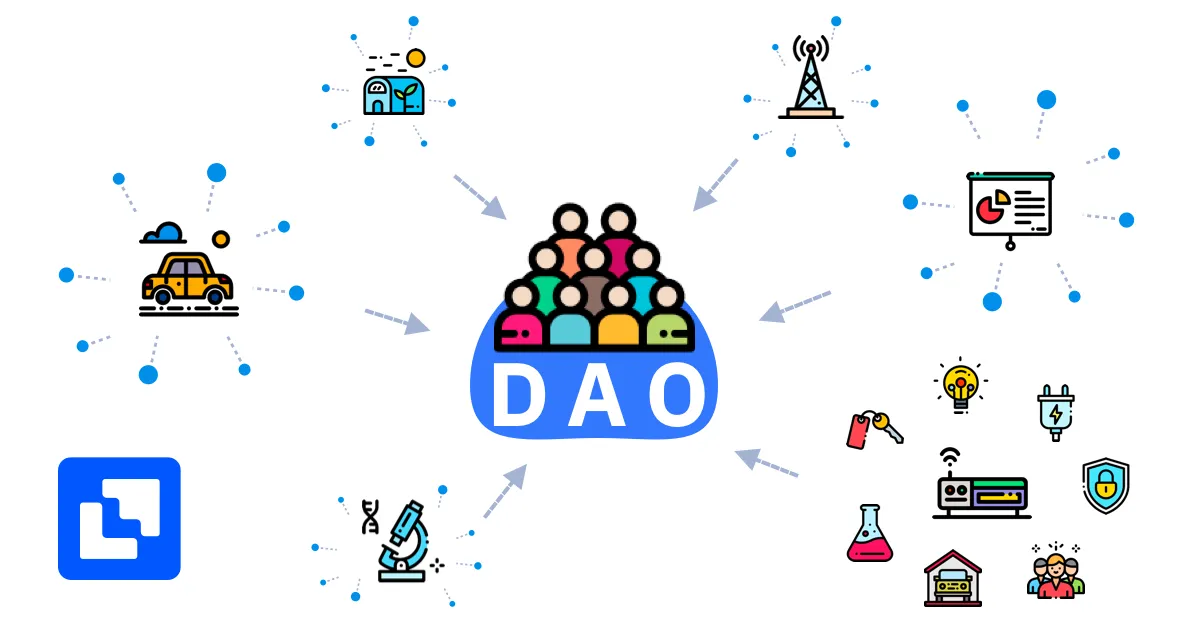
According to ethereum.org, Decentralized, Autonomous Organizations are entities that are collectively owned and managed by their members with built-in treasuries that no one has the authority to access without the approval of the group. Decisions are governed by proposals and voting to ensure everyone in the organization has a voice.
DAOs run on smart contracts, meaning that once something is decided and deployed, it can not be tampered with unless the community collectively agrees on a change. That is, of course, assuming that the network is truly decentralized. If that is the case, the code is the law, and the only way to change the law is through a proposal that will be voted upon and must pass before anything takes place.
But how does one participate in a DAO?

There are a few different models for DAO membership, but the most interesting to me is token-based membership.
In this case, members can acquire governance tokens by buying them or other means (providing liquidity, for example). That alone grants them the right to participate in the decision-making process through a vote.
One thing that is important to be said is that if a project doesn't have a way to ensure a good distribution of governance tokens (whether that is intentional or not), there is a risk that most tokens end up being concentrated in the hands of only a handful of people who will have control over the network.
And how is it working for the Packers?
Of course, this can't be used as an argument for DAOs, but just out of curiosity, the Packers have been doing quite well. Even though it's been a while since they had a shot at the Super Bowl, they are the team with the highest win percentage (57.3%) in the NFL and they have won 4 Super Bowls out of the five they played.
Final thoughts
Decentralized Autonomous Organizations will have an essential role in the future of web 3.0 and crypto as they bring democratization, transparency and security to everyone involved.
There are some things to keep in mind, such as governance token distribution and stuff like that, but if implemented correctly, a DAO is a great way to create a group, community or institution involving funding and money.