

Good day community.
Continuing a line of simple but complex dishes, I present this recipe for aubergines with caramelized onions and red peppers. The main idea is to soften the slight spicy flavor of the aubergine and neutralize it, for this I have used a method of preparation that, without taking away all its flavor, softens it and gives it a very special touch in combination with the garnish that I propose.
Aubergines with caramelized onions and red peppers
INGREDIENTS FOR 4 PEOPLE:
- 3 aubergines
- ½ kg red peppers
- 1 kg onions
- rice milk
- 250 gr refined corn flour
- 250 gr brewer's yeast
- Parsley
- Nutmeg
- Ginger
- Pink salt
- Birch sugar
- Virgin olive oil


METHOD OF PREPARATION 4 RATIONS:
The first steps I did for this recipe were to first prepare the bell peppers and caramelized onion. With the pepper washed and dried, I proceed to empty it, removing the tip and the seeds. Once the pepper is empty, I add a pinch of pink salt inside. I place all the peppers to later fry them over a very low heat in olive oil. I use a lid so that there is more evaporation of the water they contain and prevent the oil from escaping. I move them as they are made, always over a very low heat.


An important detail is that both aubergines and peppers or onions are currently harvesting. These that I bring you are collected a few hours ago and come from organic gardens of small production. They are fruits from a garden that is called “from the country” which in slang means that they are from the area where I live. The low and high plains of the Guadiana River (Spain) are an orchard of life, orchards and fruit trees. I also highlight the large extensions of olive groves in this area.


The next thing I prepare is the onion, peel and clean the onion to cut it into julienne strips. I prepare a frying pan with olive oil and when it is a little hot I add the onion. The process of caramelizing it is slow, I use a fairly low heat and give it a lot of time. I add a pinch of salt to produce a sweating effect and lose water.


In this step I let the onion cook and when it turns golden I add a little water to continue cooking. When the water evaporates, I add a few drops of apple cider vinegar and two tablespoons of birch sugar and leave everything on a very low heat until I get the result and texture I'm looking for. I taste almost at the end of salt and if it needs a pinch more I add it.
The next process is to peel and cut into semi-thick sheets to coat the aubergines. Preparing the batter is the first thing. I add the spices, parsley, ginger and nutmeg to the brewer's yeast to spice up the batter.


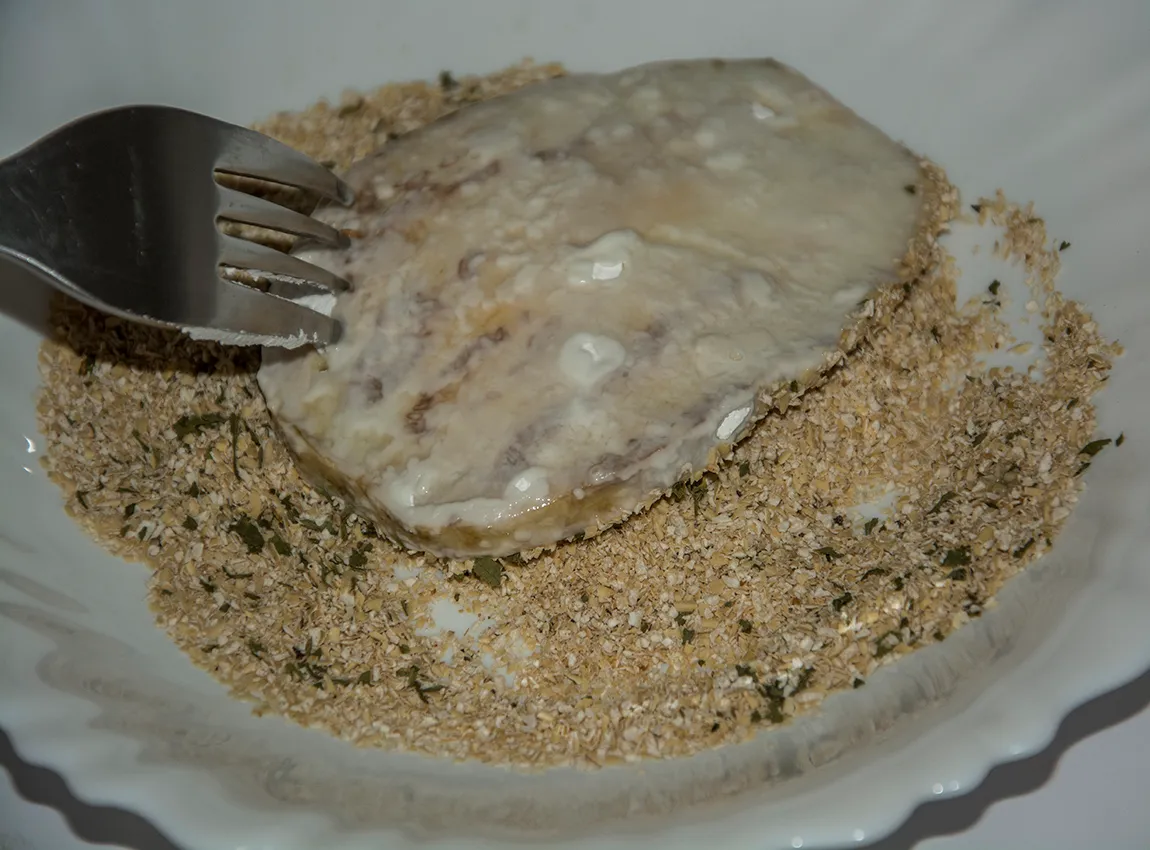
In the following process, cut the aubergine into slices. This is where the trick of extracting a bit of that spicy touch comes in, submerging the slices in rice milk giving it and missing that touch. The use of rice milk also facilitates the batter and it stays well fixed and stuck to the pieces to be fried. Firstly I coat with corn flour, I proceed to soak in milk and then in the brewer's yeast preparation with the condiments to leave the sheets prepared.


Continue this process until you have all the battered pieces, then proceed to fry them in olive oil over medium heat.


Spanish
Berenjenas con cebolla caramelizada y pimientos rojos
Buenos días comunidad.
Berenjenas con cebolla caramelizada y pimientos rojos
Siguiendo una línea de platos sencillos pero de compleja elaboración os presento esta receta de berenjenas con cebolla caramelizada y pimientos rojos. La idea principal es suavizar el ligero sabor picante de la berenjena y neutralizarlo, para ello he usado un modo de elaboración que, sin quitarle todo su sabor, suaviza y le da un toque muy especial en combinación con la guarnición que os propongo.
INGREDIENTES PARA 4 PERSONAS:
- 3 berenjenas
- ½ kg pimientos rojos
- 1 kg cebollas
- Leche de arroz
- 250 gr harina refinada de maíz
- 250 gr levadura de cerveza
- Perejil
- Nuez moscada
- Jengibre
- Sal rosa
- Azúcar de abedul
- Aceite de oliva virgen
METODO DE PREPARACIÓN 4 RACIONES
Los primero pasos que hice para esta receta fueron prepara primero los pimientos y la cebolla caramelizada. Con el pimiento lavado y seco procedo a su vaciado sacándole la punta y las semillas. Una vez con el pimiento vacio le añado una pizca de sal rosa en el interior. Coloco todos los pimientos para posteriormente freírlos a fuego muy lento en aceite de oliva. Uso una tapadera para que se produce más evaporación del agua que contienen y evitar que salte el aceite. Voy moviéndolos en la medida que se van haciendo, siempre a fuego muy lento.
Un detalle importante es que tanto berenjenas como pimientos o cebolla están en estos momentos en época de recogida. Estos que os traigo están recogidos de hace escasas horas y proceden de huertos ecológicos de pequeña producción. Son frutos de una huerta que se denomina “del país” que en el argot significa que son de la zona donde vivo. Las vegas bajas y altas del río Guadiana son un vergel de vida, de huertos y frutales. Destaco también las grandes extensiones de olivares que hay en esta zona.
Lo siguiente que preparo es la cebolla, pelo y limpio la cebolla para cortarla en juliana. Preparo una sartén con aceite de oliva y cuando está un poco caliente añado la cebolla. El proceso de caramelizarla es lento, uso un fuego bastante bajo y le doy mucho tiempo. Le añado una pizca de sal para producir un efecto de sudoración y que pierda agua.
En este paso dejo la cebolla hacerse y cuando adquiere un tono dorado añado un poco de agua para proseguir con la cocción. Cuando el agua se va evaporando añado unas gotas de vinagre de manzana y dos cucharas de azúcar de abedul y dejo todo a fuego muy lento hasta conseguir el resultado y textura que busco. Pruebo casi al final de sal y si necesita una pizca más se la añado.
El siguiente proceso es pelar y trocear en laminas semi gruesas para rebozar las berenjenas. Preparar el reboce es lo primero. Añado las especias, perejil, jengibre y nuez moscada a la levadura de cerveza para tener condimentado el rebozado.
En el siguiente proceso cortar la berenjena en láminas. Es aquí donde entra el truco de extraer un poco de ese toque picante de la misma sumergiendo las laminas en leche de arroz dándole y extrañándole ese toque. El uso de la leche de arroz facilita además el rebozado y que se quede bien fijo y pegado a las piezas a freír. Primeramente rebozo con harina de maíz, procedo a remojar en leche y después en el preparado de levadura de cerveza con los condimentos para dejar las laminas preparadas.
Seguir con este proceso hasta tener todas la piezas rebozadas, luego proceder a freír en aceite de oliva a fuego medio. Con esto quedan montadas y listas para comer, espero os guste esta receta y vuestros comentarios.
| Categoría | Phototalent |
| Ajustes | ISO-100 f/8 1/100s |
| Cámara | Nikon D7100 - Olympus E410 y Kodak Z |
| Lente | Nikkor or Olympus |
| Localización | Spain |


Image ©oscarps. All Rights Reserved.
Original content by


