
Ay-yo, beer buddies. How are you doing? Hope you're all doing great.
I know I kinda promised last time that I'd be alternating between home tastings and trip tastings, but, well, you know how I am. Today's beereview isn't technically from a trip – not in the usual way, at least. I brought them back from the trips I had to South and Northeastern Brazil – Florianópolis and Olinda, respectively – so it kinda counts as a trip? Maybe, heh.
Versión en español
Ay-yo, colegas cerveceros. ¿Cómo andan? Espero que todo les esté yendo genial.
Sé que más o menos prometí la última vez que iba a alternar entre catas en casa y catas durante viajes, pero bueno, ya saben cómo soy. La beereview de hoy técnicamente no viene de un viaje – al menos no de la forma habitual. Me traje estas cervezas de los viajes que hice al sur y al noreste de Brasil – Florianópolis y Olinda, respectivamente – así que, ¿cuenta como viaje? Tal vez, jeje.
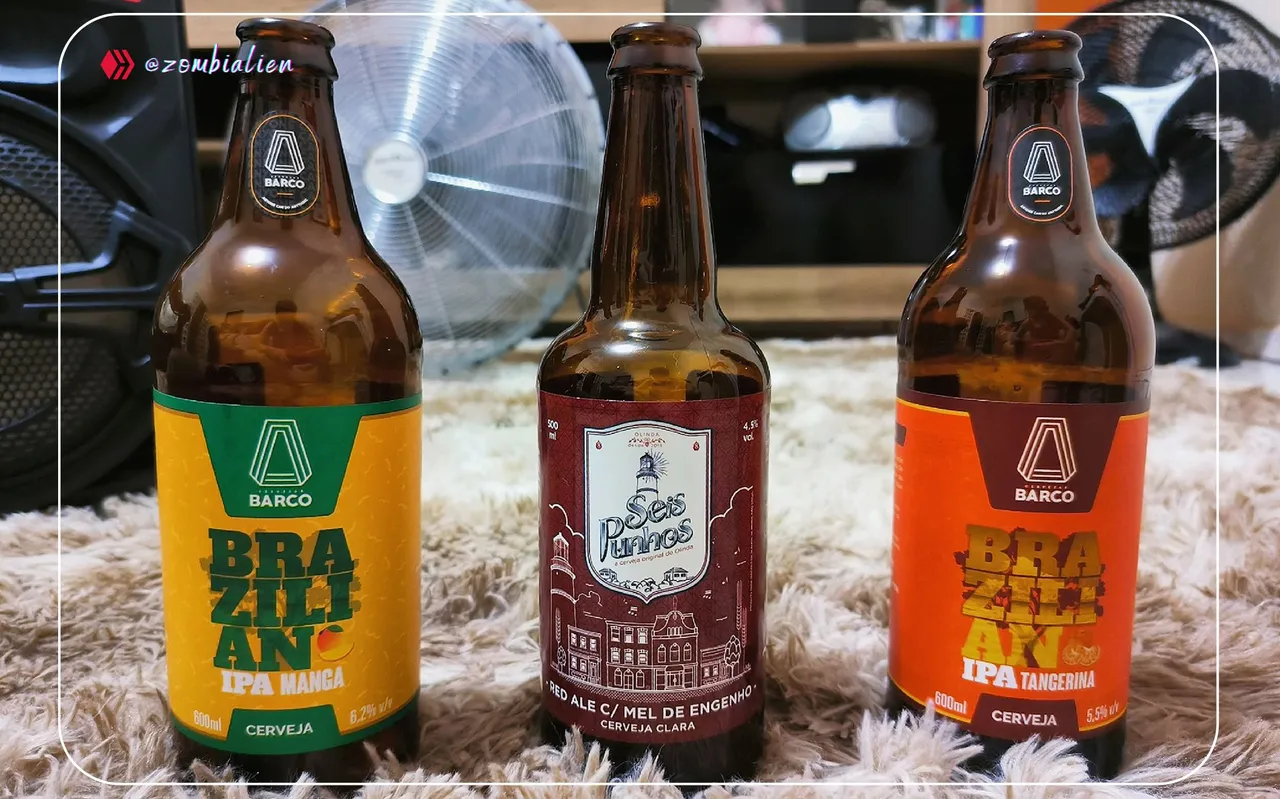
First of that night was directly from the city I unfortunately hadn't explored properly yet. Seis Punhos is a fairly new microbrewery, founded in 2015 in Olinda, by three entrepreneur friends passionate about craft beer. When I picked up this bottle, there weren't any other styles from them available at the shop – after a research, I found out they actually don't have many labels out there, just a couple more besides this red ale. What caught my eye, though, was the fact that this one is brewed with mel de engenho — a traditional sugarcane syrup from the Northeast of Brazil. Definitely not something we see in beer every day.
Versión en español
Primera de esa noche vino directamente de una ciudad que, lamentablemente, todavía no he tenido la oportunidad de explorar bien. Seis Punhos es una microcervecería bastante nueva, fundada en 2015 en Olinda por tres amigos emprendedores apasionados por cerveza artesanal. Cuando agarré esta botella, no había otros estilos de la marca disponibles en la tienda – después de investigar un poco, descubrí que en realidad no tienen muchas etiquetas en el mercado, solo un par más además de esta red ale. Lo que me llamó la atención, sin embargo, fue el hecho de que esta está elaborada con mel de engenho — un jarabe tradicional de caña de azúcar del noreste de Brasil. Definitivamente no es algo que se vea todos los días en una cerveza.


So, this red ale has 4.5% ABV and 24 IBU. I think I paid something around $20 BRL for the 500 ml bottle ($3.6 USD, approximately). There was barely any foam when I poured it – almost none, actually – but the carbonation was surprisingly high. I could see it fizzing, super effervescent. However, what really stood out was the color: a gorgeous, cloudy copper brown that looked more like a dunkel than a typical red ale. Makes total sense considering this one's brewed with sugarcane syrup, which is pretty dark by nature.
Versión en español
Entonces, esta red ale tiene 4.5% de ABV y 24 IBU. Creo que pagué algo alrededor de $20 BRL por la botella de 500 ml ($3.6 USD aproximadamente). Casi no tenía espuma al servirla – de hecho, casi nada – pero la carbonatación era sorprendentemente alta. Se podía ver burbujeando, súper efervescente. Sin embargo, lo que realmente llamó la atención fue el color: un marrón cobrizo turbio y hermoso que se parecía más a una dunkel que a una red ale típica. Tiene todo el sentido considerando que está elaborada con jarabe de caña de azúcar, que por naturaleza es bastante oscuro.

On the nose, I got a subtle mix of toffee and cereal notes, but the flavor was way more expressive. The hops were there, but tucked in behind the rich sweetness of the sugarcane syrup. It's a different kind of sweetness – reminded me of cachaça, but without the alcohol punch. Speaking of which, the alcohol was barely noticeable. A mild roasted note lingered in the aftertaste, rounding it off nicely. Medium-light body, slightly syrupy mouthfeel. It's not an average red ale, but that's exactly what made it work for me.
Versión en español
En nariz, percibí una mezcla sutil de notas a toffee y cereales, pero el sabor fue mucho más expresivo. El lúpulo estaba presente, pero escondido detrás del dulzor intenso del jarabe de caña de azúcar. Es un tipo de dulzor diferente – me recordó a la cachaça, pero sin el golpe alcohólico. Hablando de eso, el alcohol era casi imperceptible. Una nota tostada suave permanecía en el retrogusto, redondeando bien la experiencia. Cuerpo de medio a ligero, sensación en boca ligeramente almibarada. No es una red ale común, pero eso fue justamente lo que me hizo disfrutarla.


Now moving to the stronger beers – though they're not literally from Florianópolis, this first one still comes from the South – Barco is a gypsy brewery originally from Porto Alegre, in the state of Rio Grande do Sul. I've already reviewed two of their beers here on the blog, so I won't get too deep into their story this time. Just a quick reminder: they started back in 2012, brewing in other facilities, and are known for creating bold, creative recipes, like these two special IPAs. Oh, and before I forget – you can check out my previous reviews of Barco beers here and here.
Versión en español
Ahora pasamos a las cervezas más fuertes – aunque no provienen literalmente de Florianópolis, esta primera sigue viniendo del sur – Barco es una cervecería nómada originaria de Porto Alegre, en el estado de Rio Grande do Sul. Ya he reseñado dos cervezas de ellos aquí en el blog, así que esta vez no me voy a extender demasiado sobre su historia. Solo un recordatorio rápido: comenzaron en 2012, elaborando en instalaciones de terceros, y son conocidos por crear recetas atrevidas y creativas, como estas dos IPAs especiales. Ah, y antes de que se me olvide – puedes ver mis reseñas anteriores de cervezas de Barco aquí y aquí.

These two IPAs from Barco actually came from a special series called Brazilian IPA. It started with their 6th Beer Match, a homebrewing contest the brewery organizes every year. The Goiaba IPA (guava) was the winning recipe in 2017, and it got such a great response that Barco decided to also release the Manga IPA (mango), which had placed second. In 2018, they completed the trio with a Tangerina IPA (tangerine). All of them are based on an IPA recipe, with fruit extract added to the mix.
Although I had all three of them, I preferred to drink the guava IPA another time. After the red ale, I went for the mango IPA – and only later did I notice that this one actually had 1 IBU higher than the tangerine version. Still, I assumed it would taste sweeter because of the mango juice – and I wasn't wrong, haha. It sits at 6.2% ABV and 41 IBU, and I paid around $18 BRL ($3.22 USD, aproximately) for the 600 ml bottle.
Versión en español
Estas dos IPAs de Barco en realidad forman parte de una serie especial llamada Brazilian IPA. Comenzó con su sexto Beer Match, un concurso de cerveceros caseros que la cervecería organiza cada año. La Goiaba IPA (guayaba) fue la receta ganadora en 2017, y tuvo una respuesta tan buena que Barco decidió lanzar también la Manga IPA (mango), que había quedado en segundo lugar. En 2018, completaron el trío con la Tangerina IPA (mandarina). Todas están basadas en una receta de IPA, con extracto de fruta añadido a la mezcla.
Aunque tenía las tres, preferí dejar la IPA de guayaba para otro momento. Después de la red ale, fui por la IPA de mango – y solo más tarde me di cuenta de que esta en realidad tenía 1 IBU más que la versión de mandarina. Aun así, supuse que sería más dulce por el jugo de mango – y no me equivoqué, jaja. Tiene 6.2% ABV y 41 IBU, y pagué alrededor de $18 BRL ($3.22 USD, aproximadamente) por la botella de 600 ml.

The beer poured a turbid golden-yellow, with a creamy look that was noticeable right away. It formed a medium-to-low head – not super creamy, but it lasted a decent while. On the nose, the hops brought out a strong pine and lemongrass aroma – mostly pine, really. The mango aroma stood out too, sweet and tropical, just like I expected. Even though it's a fruity IPA, I felt like the juice-to-beer ratio was well balanced. It still tasted like a proper IPA, but with a juicy touch.
Flavor-wise, it had that sweetness from the mango (one of my favorite fruits btw), along with a refreshing note that reminded me of mint. There was some resin, and a citrusy edge as well. I read somewhere that this IPA used Sabro hops, but I couldn't confirm that through any official source. The body was medium, leaning toward full, with low carbonation and a juicy, creamy texture. Really, really good. The aftertaste had a minty-herbal finish. Too bad I've never found this line again – especially after Barco "closed" (they actually just changed their production model). Haven't seen these anywhere since. Real shame.
Versión en español
La cerveza se sirvió de un color amarillo dorado turbio, con un aspecto cremoso que se notaba de inmediato. Formó una espuma de tamaño medio a bajo – no era muy cremosa, pero duró un buen rato. En nariz, el lúpulo aportaba un fuerte aroma a pino y citronela – sobre todo a pino, la verdad. El aroma a mango también se destacaba, dulce y tropical, tal como lo esperaba. Aunque es una IPA frutal, sentí que la proporción entre jugo y cerveza estaba bien equilibrada. Seguía teniendo el sabor de una IPA de verdad, pero con un toque jugoso.
En cuanto al sabor, tenía esa dulzura del mango (una de mis frutas favoritas, por cierto), junto con una nota refrescante que me recordó a la menta. También había algo de resina y un matiz cítrico. Leí por ahí que esta IPA llevaba lúpulo Sabro, pero no lo pude confirmar en ninguna fuente oficial. El cuerpo era medio, tirando a denso, con baja carbonatación y una textura jugosa y cremosa. Muy, muy buena. El retrogusto tenía un final mentolado y herbal. Lástima que nunca volví a encontrar esta línea – especialmente después de que Barco "cerró" (en realidad solo cambiaron su modelo de producción). No he vuelto a verlas por ningún lado. Una verdadera pena.


Compared to its mango sibling, the Tangerina IPA comes in with 1 IBU less and a slightly lower ABV (5.5%). It's also a touch darker in color – more orange-toned – and a bit clearer in the glass, with a less creamy texture. On the nose, it's more restrained than the mango version. There's the same piney, herbal base (most likely the same IPA backbone), but with a citrus touch from the tangerine. That citrus shows up more in the aroma than the taste, though. I felt like the tangerine juice could've been bumped up a little to really shine like the mango did. Still, it blended nicely with the IPA character. The aftertaste brought a bit of that signature tangerine astringency, followed by a cool, herbal freshness. Body was medium but lighter than the mango, with moderate carbonation. Tasty for sure – but yeah, the mango still wins this round. I'll save my final verdict for when I try the guava one, heh.
Versión en español
En comparación con su hermana de mango, la Tangerina IPA tiene 1 IBU menos y un ABV ligeramente más bajo (5.5%). También es un poco más oscura en color – con un tono más anaranjado – y algo más clara en el vaso, con una textura menos cremosa. En aroma, es más contenida que la versión de mango. Tiene la misma base de pino y hierbas (probablemente la misma receta de IPA), pero con un toque cítrico de mandarina. Ese cítrico se nota más en el aroma que en el sabor, eso sí. Sentí que el jugo de mandarina podría haber sido un poco más presente para brillar como lo hizo el de mango. Aun así, se integró bien con el carácter de la IPA. El retrogusto trajo un poco de esa astringencia característica de la mandarina, seguida de una frescura herbal refrescante. El cuerpo era medio, pero más ligero que el de mango, con carbonatación moderada. Rica, sin duda – pero sí, la de mango sigue ganando esta ronda. Guardaré mi veredicto final para cuando pruebe la de guayaba, je.

Have you ever tried one of these? Let me know!
Thank you so much. Cheers!