

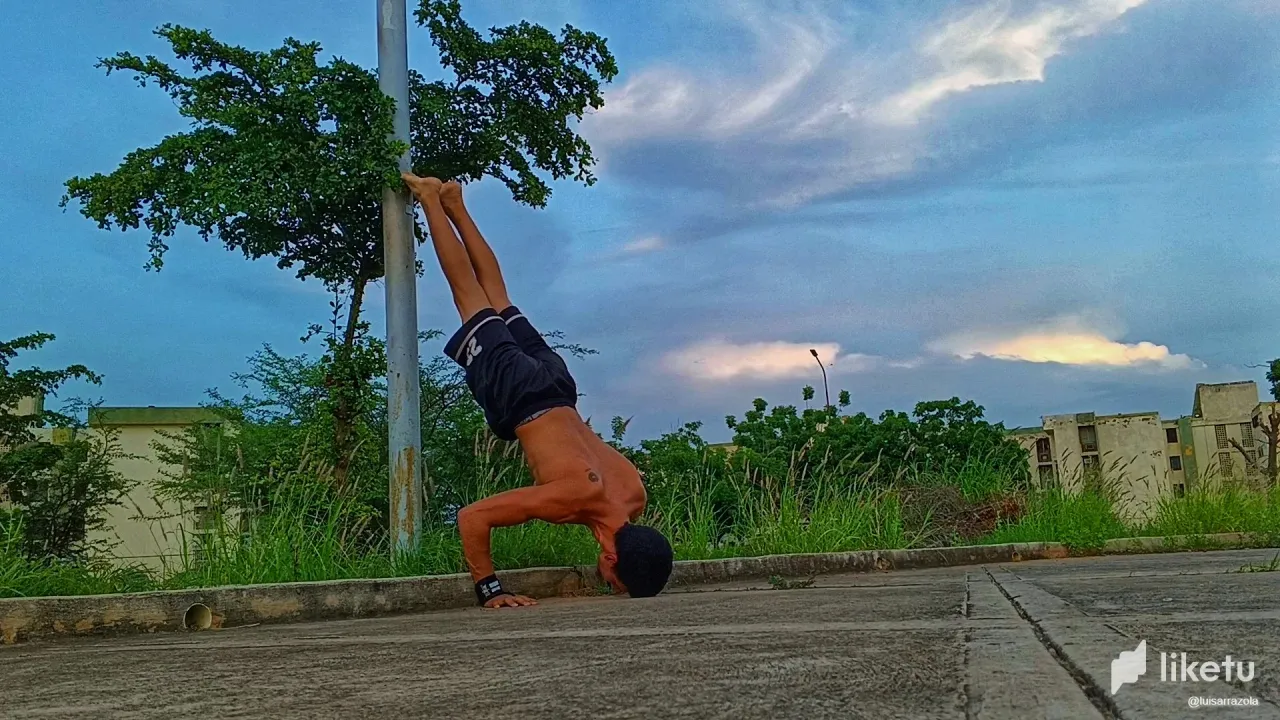


Lograr el pino, o parada de manos, es una meta admirable en el mundo del fitness y la calistenia. Este movimiento icónico no solo demuestra fuerza y control, sino que también es una base para muchas otras habilidades avanzadas. El pino consiste en mantener el cuerpo erguido y equilibrado sobre las manos, con los pies apuntando hacia el cielo.
Existen muchas variaciones del pino: desde el clásico con las piernas juntas hasta versiones más complejas como el pino en una mano o con las piernas separadas. Diferentes disciplinas lo incorporan en sus prácticas; la gimnasia lo utiliza como un elemento fundamental, el parkour lo emplea para superar obstáculos de manera fluida y creativa, y en la danza se usa para añadir un elemento acrobático a las coreografías.
CLICK HERE FOR ENGLISH VERSION 👇
Achieving the handstand, is an admirable goal in the world of fitness and calisthenics. This iconic movement not only demonstrates strength and control, but is also a foundation for many other advanced skills. The handstand involves keeping the body upright and balanced on the hands, with the feet pointing skyward.
There are many variations of the pino: from the classic handstand with legs together to more complex versions such as the handstand on one hand or with legs apart. Different disciplines incorporate it in their practices; gymnastics uses it as a fundamental element, parkour uses it to overcome obstacles in a fluid and creative way, and in dance it is used to add an acrobatic element to choreographies.

En la calistenia, el pino es uno de los movimientos más espectaculares y accesibles. No requiere de equipo especializado; un suelo firme y una pared para los principiantes son suficientes. Personalmente, he logrado sostener el pino por un minuto completo, e incluso puedo hacerlo con las piernas abiertas. La clave de mi progreso ha sido la práctica constante y el fortalecimiento de los hombros, que son el músculo principal en este ejercicio.
CLICK HERE FOR ENGLISH VERSION 👇
In calisthenics, the handstand is one of the most spectacular and accessible movements. It requires no specialized equipment; a firm floor and a wall for beginners are sufficient. Personally, I've managed to hold the pino for a full minute, and I can even do it with my legs open. The key to my progress has been constant practice and strengthening the shoulders, which are the main muscle in this exercise.
Mi rutina diaria incluye práctica después de un adecuado calentamiento y estiramiento. Mantengo la posición durante dos series de 30 segundos cada una. Esta práctica regular ha sido fundamental para alcanzar mi objetivo actual.
Si estás interesado en aprender a hacer el pino, te animo a comenzar tu viaje. Requiere paciencia y práctica constante, pero definitivamente no es imposible. Además, la diversión y satisfacción que encontrarás en el proceso son inigualables. ¡Anímate a probarlo y disfruta del camino hacia tu propio pino perfecto!
CLICK HERE FOR ENGLISH VERSION 👇
My daily routine includes practice after a proper warm-up and stretching. I hold the position for two sets of 30 seconds each. This regular practice has been instrumental in reaching my current goal.
If you are interested in learning to do the handstand, I encourage you to begin your journey. It takes patience and consistent practice, but it is definitely not impossible. Plus, the fun and satisfaction you'll find in the process are unmatched. Give it a try and enjoy the journey to your own perfect handstand!


"Todo campeón fue alguna vez un contendiente que se rehusó a dar por vencido."
- Sylvester Stallone.
"Every champion was once a contender who refused to give up."
- Sylvester Stallone.

 |