

O amaranth, so precious you are! I've known you for some time now, but just now am falling on my knees in love with you.
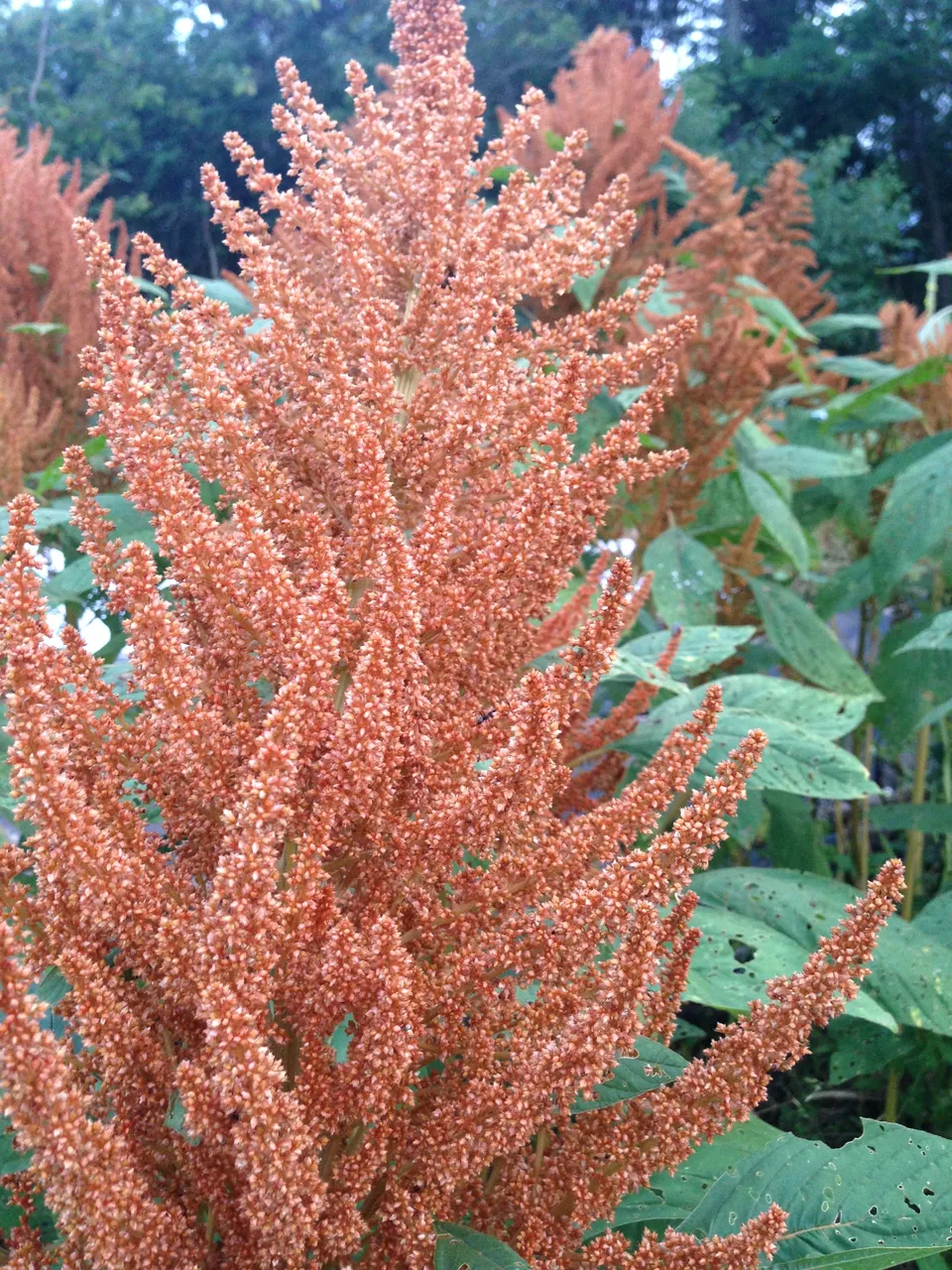
I've eaten your wild leaves in the north, eaten your seeds puffed in Mexico, stewed you at home and have been watching you a grow a while now in our gardens. Such a fantastic plant you are!

Known in Nahuatl as the immortal grain, in Greek as one who never wilts and by NASA as the food of the future. When will we humans ally with you more fully?
Last year I planted a few golden amaranth plants (Amaranthus cruentus) from a neighbor's dusty seed stock. Didn't do anything other than put them into earth. Seeing the resulting plants thrive in nearly bone dry soil and scorching sun was impressive.
(Amaranth greens at the beginning of the season, ravaged by insects. The other photos you see are the completely recovered plants!)

This year the seed stock that birds scattered took advantage of our digging efforts and volunteered in many locations. It was hit heavy by insects in early life, but today as the flowers bloom, I have so much gratitude for such a rugged plant. Seeing the rich golden heads inspires me. What sustenance, messages and medicines do you hold?

What shall we do with these luscious protein rich seeds? Winnow for our food? Pop it, stew it, brew with it, use as chicken feed?
(Winnowing the dried amaranth we grew. We saved the seeds for soups, popping and I added it to salsas I put away for winter)

Quinoa gets a lot of press, but amaranth seems shy comparatively. Both boast a complete protein profile, but Amaranth is much richer in calcium and does not have the soapy seed coating that quinoa does. It was cultivated as one of the four staple crops in pre columbian meso America, along with corn, beans and chia. It was/Is also grown for seed in India and the world over as a green vegetable, sometimes know a caliloo.
(Drying in the sun to prepare for winnowing)

In Mexico it carries a sordid history involving the Spanish criminalizing the cultivation of amaranth, at times resorting to killing indigenous growers. Thanks to many brave seed warriors, the crop was cultivated in remote mountain villages in Oaxaca and Chiapas and northern Guatemala and remains today as a food crop.
Today I celebrate you great Amaranth! Thank you for your strong spirit and reminding me to persevere through adversity.
Summer's harvest.

Written over the summer in the "heat" of the moment ;)
We believe Amaranth is a crop for every homestead! Naturalizes easily ;)
(You probably have a weed relative already there, pigweed, which sometimes has thorns!)
