

Many of you have probably seen our milking stand by now.
If not, we recently built our own out of scrap material recently to help us with some chores. It was not only free, but a good family project. Here is a photo of the finished project when we were sizing it up.

Once we knew that it would work, we still had to prove it!

THE TEST DRIVE!

Soon, we had Daisy on the stand and enjoying a snack. The time to the "test drive" had arrived and we wanted to make sure that everything was working properly.

Although I plan on mounting a feeding tray to it, we had not gotten that far so Red-Pepper just held a dish out for Daisy. This allows her to enjoy herself with a tasty treat while we work, and it makes everything easier for her.

While 


With some practice, I could actually almost get a continuous stream! That was kind of surprising for me. It helps for a few reasons. For one, it takes less time for the animal. Secondly, if the goats milk is not cooled soon enough, the flavor can be affected.

The repetition can be a bit monotonous, and my hands did cramp up a bit, but thankfully I have a backup plan for these instances.

Yup, just "make the kids do it!" LOL. Seriously though, taking turns can help and then we can all practice our skills and learn from one another. In the end, we concluded that the milking stand was a success. Some suggestions have been made, and a few improvements may be added, but overall we will say that it passed our test!
PRACTICE PROCESS
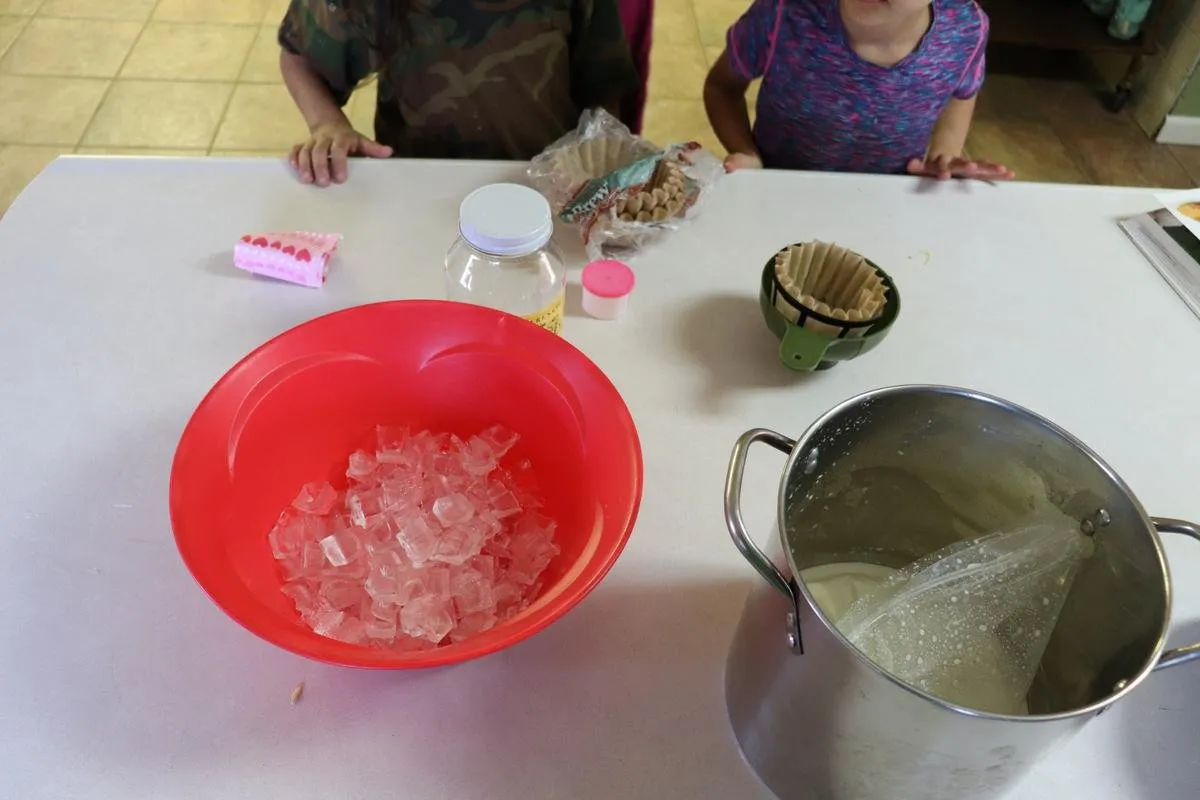
The next step for us was to run through the process that we will be using when we plan on drinking the milk. Our basic supplies are ice water, a sterile jar, coffee filters, and a strainer.

We place a coffee filter into the strainer and stick it into the mouth of the jar. Then, the jar is placed in a large bowl of ice water and the fresh milk is poured into the top. This helps remove any tiny hairs or other possible contaminants that may have fallen into the milk. Ideally the goal is to be as clean as possible, and to keep everything sterile and uncompromised, but practice makes perfect. That's why we ran the "animal milk" through the process.

Truly, we are all learning this together on our homestead, but each skill mastered is just one more thing that we won't have to learn later. With milking goats, it suddenly came upon us because we didn't even know that Daisy was pregnant when we purchased her. As with many things in life, we just adjust and go with the flow.

It can take a bit of time for all of the milk to make its way through the filter and strainer, but being patient is just another skill to work on mastering. Eventually, we had a nice big jar of goats milk!
As always, I'm and here's the proof:
proof-of-goat-milk


Until next time…
Don’t waste your time online, invest it with steemit.com


