
Therefore, I will make a brief introduction about the orchids, which I find particularly interesting and I ask you to help identify this orchid.
What is an orchid?
Orchids are considered to be the most evolved of all plants with flowers.
What does an orchid do? There are two answers. The first and simplest is that an orchid is what professional taxonomists tell you is an orchid. That's enough for most people. Technically, an orchid is a flowering plant that exhibits a unique reproductive strategy. All orchids have male and female reproductive structures cast into a single structure commonly called a "column". Although the reproductive parts are contained in the same structure, the orchids have developed a highly efficient system of ensuring that self-pollination does not occur.
What catches my attention
Orchids are the purest plants in the world for several reasons. First, many orchid flowers are simply, breathtaking, you find in almost every color, shape, size, and many last for weeks or months.
Many people think that orchids are exotic, rare and extremely difficult to grow. The first item is usually true, as is the second. What is difficult for people to understand is that they are some of the most "easy" and "most satisfying" houseplants that can be had.
It is true that there are many varieties of orchids that are difficult to cultivate even for specialists. But the most commonly seen orchids are easy to grow and bloom indoors (this explains why they are most commonly seen).
I find orchids so interesting because they have a high variety of forms. It is estimated that there are 50,000 different species of orchids out there on all continents except Antarctica.
You may have some growth in your yard because there are many species in virtually every climate.
Now we go to the photos.
This is a photo of the bulbs before they bloom.
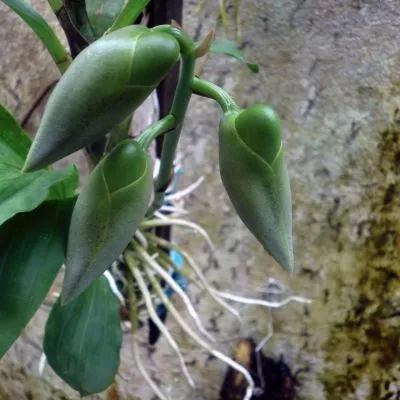
When it bloomed.

Another angle. Now comes something interesting: I thought that until that point the flowers had not yet opened completely...

But it just started to change color and wither over time.

I believe that there is no "open" because there have been other blooms of the same species in the past and from what I remember, they were similar to this.
I'm going to tag some Steemitians who I think can help me:


Everyone has one thing in common: A post about orchid.
If you can resteem or tag some friend who can identify, I thank you very much.
Hugs to all and thank you!

