
The ability to produce light that some living beings have is, at least, one of the most beautiful mutations of the biological world. Light is an incredible sight when irradiated by the same organisms.
This capacity is known as bioluminescence (the change of chemical energy in light) and although it is a not so regular phenomenon is produced by the most minute biological realms: from bacteria, fungi, unicellular protists, coelenterates, worms, mollusks, cephalopods, crustaceans, insects, echinoderms, fish, etc.
Therefore, in the ocean, this phenomenon occurs very easily, because it is full of the aforementioned beings. In Mexico there are paradisiacal beaches luminescent, both sea and lakes and lagoons. These places are mostly located in the south of the country, where, in itself, the beaches are a legend for their aesthetic magnificence.
Here we present 4 legendary bioluminescent beaches:

Lagoon of Chacahua National Park
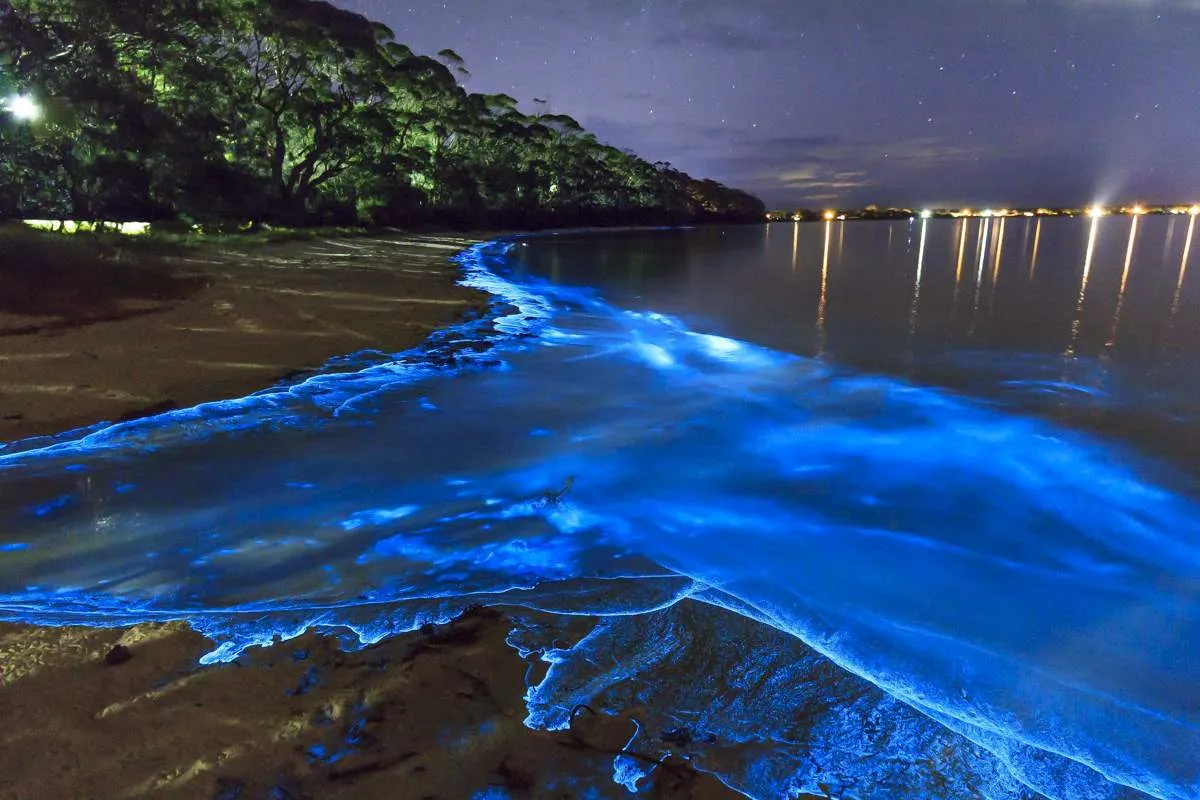
Especially when there is not much moonlight the sea exudes neon lights green, silver, blue ... These beautiful lagoons are Oaxacan and can be reached from a collective that is addressed in Puerto Escondido. From zapotalito you will arrive at the pier where they will take you to this place. Here you have to "jump the waters" (move them) as the locals say to find this amazing phenomenon.
Lagoon of Manialtepec
Also in Oaxaca, near Puerto Escondido, about 15 minutes. Especially during the rainy season is when this effect occurs. From Puerto Escondido you can take routes that reach the lagoon. Its light is radiated mostly when making contact with water, so, swimming is a very special experience because all your movements practically emit light trails that remain suspended. This lagoon is populated by millions of microorganisms that are known as dinoflagellates. Kayaking tours are offered in the evenings.

Holbox Island
This idyllic island, one of the most beautiful in the world and that thanks to the persistence of its inhabitants still remains largely virgin. Here millions of blue luminous points are made in the sand; a blue electric blue unfolds like a carpet of stars. From July to January is when you can most enjoy this show. Here its bioluminescence when shaking its waters is silver, greenish and bluish colors.

Xpicob, Campeche
Also known as a tortugero camp. It is very close to the city of Campeche. This beach is also very beautiful for hosting a large number of species such as pelicans, seagulls, sea swallows among others. Here there are also many corals and sponges. To get here, you must board a panga on the dock of the camp, go along the Bajo Xpicob and wait for the level of the tide does not exceed the middle leg and there are no waves that shake the sea.