
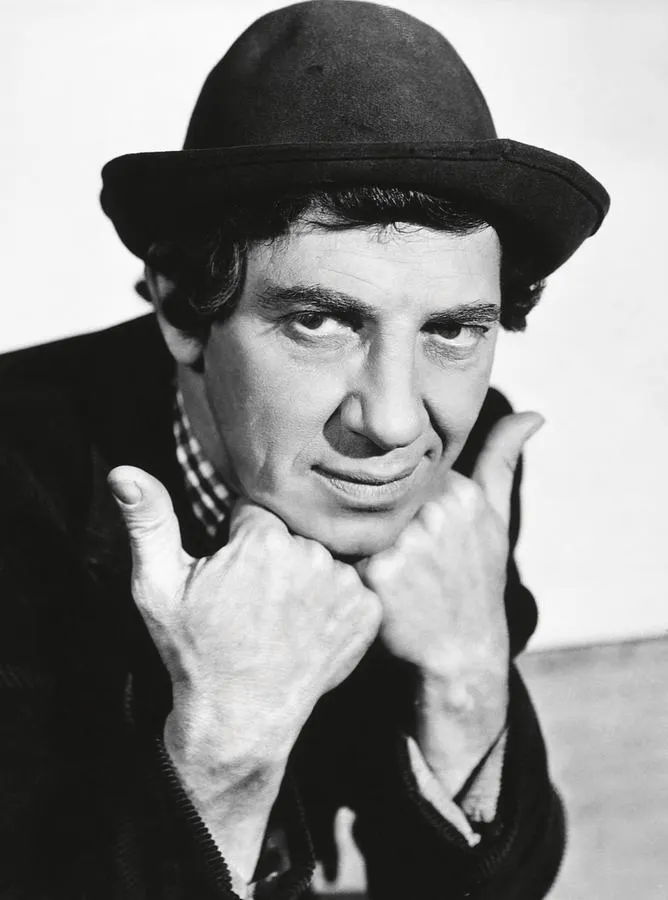
Born: March 22, 1887 – Died: October 11, 1961
Leonard "Chico" Marx, known for his street-smart persona and impeccable comedic timing, was born on March 22, 1887, in New York City to Sam and Minnie Marx. His father worked as a tailor, and his mother, a driving force behind the Marx Brothers’ success, came from a family of performers. Chico was one of the five Marx Brothers, a sibling act that rose to fame with their unique blend of comedy, music, and acting.
Early Life and Career
Growing up in a bustling household, Chico's formative years were filled with music and mischief. He left school young and did not pursue higher education, instead learning the ropes of entertainment from real life. His natural ability to adopt various accents and personas helped him navigate the rough neighborhoods of his youth, skills that would later define his stage character.
Chico's entertainment career began with piano playing and vaudeville performances. His first significant professional role was in 1921, with a small part in the film "Humor Risk." However, it was his portrayal of Chicolini in "Duck Soup" in 1933 that cemented his place in comedic history. The film was a hit, and Chico's performance was pivotal.
Chico's role in "A Night at the Opera" (1935) as Fiorello brought him international acclaim. This success was followed by a string of popular movies like "A Day at the Races" in 1937, further securing his stardom.
Throughout his career, Chico received recognition for his work, including a shared win for the Marx Brothers on a collective star on the Hollywood Walk of Fame. His personal life was as colorful as his on-screen characters. He was known for his love of gambling and women, which often got him into trouble but also shaped his public persona. He married twice, with his second marriage to Mary De Vithas lasting until his death. He had one daughter, Maxine Marx.
Chico's impact on Hollywood was profound. His legacy includes a new standard for comedy ensembles, and his contribution to the entertainment industry is a testament to his talent and versatility. Chico's ability to make audiences laugh, his musical talent, and his role in the legendary Marx Brothers act make him an enduring icon of the silver screen.
Filmography
| Year | Title | Role |
|---|---|---|
| 1959 | General Electric Theater (TV Series) | Harry |
| 1958 | Playhouse 90 (TV Series) | Mr. Kramer |
| 1957 | The Story of Mankind | Monk |
| 1956 | Showdown at Ulcer Gulch (Short) | Cameo appearance (Piano player) |
| 1950–1951 | The College Bowl (TV Series) | Chico Ravelli |
| 1950 | The Bigelow Theatre (TV Series) | Papa Romani |
| 1950 | The Silver Theatre (TV Series) | Papa Romani |
| 1949 | Love Happy | Faustino the Great |
| 1946 | A Night in Casablanca | Corbaccio |
| 1941 | The Big Store | Ravelli |
| 1940 | Go West | Joe Panello |
| 1939 | At the Circus | Antonio |
| 1938 | Room Service | Harry Binelli |
| 1937 | A Day at the Races | Tony (as The Marx Brothers) |
| 1936 | Hollywood - The Second Step (Short) | Chico Marx |
| 1935 | A Night at the Opera | Fiorello |
| 1933 | Duck Soup | Chicolini |
| 1933 | Hollywood on Parade No. A-6 (Short) | Unknown |
| 1932 | Hollywood on Parade No. A-5 (Short) | Unknown |
| 1932 | Horse Feathers | Baravelli |
| 1931 | Monkey Business | Chico |
| 1930 | Animal Crackers | Signor Emanuel Ravelli |
| 1929 | The Cocoanuts | Chico |
| 1921 | Humor Risk (Short) | Henchman |