
MOMOS in the Himalayas

A friend of mine had once same, “Nepalis don’t suppose. we've a bent to easily eat Greek deity." And he wasn’t off the mark. every Nepali encompasses a momo story, usually to do to to with what proportion they’ve eaten, or where they’ve eaten it. Greek deity square measure gift in Kingdom of Asian country, and, thanks to the thousands of streetside vendors across north Bharat, square measure common inside the urban center equally. the alternative day, whereas sampling a plate of steamed chicken Greek deity at Savitri Nagar, Delhi, I asked the boy behind the steamer what proportion he sold in Associate in Nursing extremely day. “Six-hundred momos", he same with a smile. Not unfortunate for a humble dish that has traversed Associate in Nursing extended due to become a staple across the country.

From Darjeeling to Dharamshala, the momo could be a necessary street food. Its roots, however, lie Tibet, where Charles AElfred the good Bell, nation India’s ambassador to Tibet and one all told the first “Tibetologists", noted in 1928 that locals immortal “ten or fifteen very little meat dumplings" for lunch. Since then, the momo has evolved into all completely different forms in various cuisines. the japanese call it gyoza, a variant of the Chinese jiaozi, whereas in central Asia, it's referred to as the manti. the various flavours and textures of a regular dumpling—a very little piece of rice dough packed with meat—excites the epicurean, but but did it initial arrive from the Tibetan highlands to Nepal?
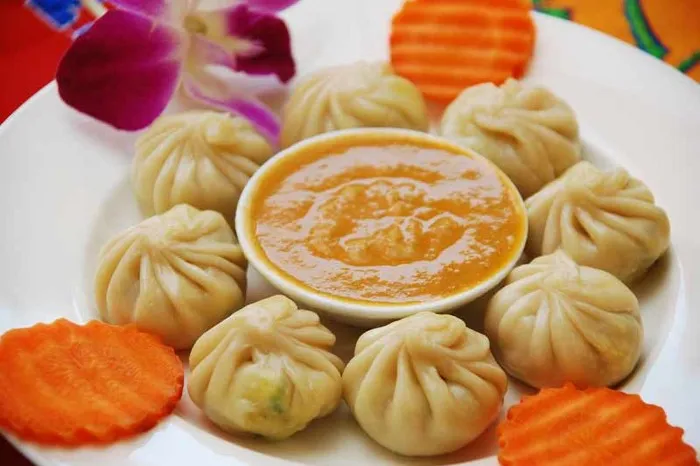
The momo’s journey from Lhasa may be a story not merely of the dumpling, but of the bravery of thousands of Newar (an ethnic group WHO were the primary inhabitants of the capital of Nepal Valley) traders WHO went back and forth between the chain passes. each journey they took from Lhasa to capital of Nepal took a minimum of 10-12 weeks (on foot at the beginning, thus on horses), and these were regular ever since the instrument between the ruler Lakshminarasingha Malla of capital of Nepal city-state and Tibet inside the seventeenth century that permissible thirty 2 mercantilism homes to be established by Newar traders in Lhasa. The instrument put together appointed a permanent representative to the Lhasa court, exempted all merchandise sold by Newar merchants from duties throughout Tibet, ensured Kathmandu’s monopoly of route on any Tibetan trade with Bharat, and, most importantly, gave capital of Nepal the sole real right to mint coins for Tibet in exchange for equivalent silver and gold.
There was a second influx of the momo once Tibetan expatriates arrived in India; this choice was initial served inside the numerous exile camps, likewise as Majnu deity Tila in metropolis and Bylakuppe in state
In the absence of roads, long caravans of traders, either on foot or on horses inside the highland, carried rice in exchange for salt inside the older days, then “cotton merchandise...woollen merchandise, hardware, corals, precious stones, tobacco, dried fruits, sugar, sirup and varied domestic utilities like matches, needles and soap" from Bharat, delivery back “skins, musk and money", equally as Chinese silk and tea, thangka paintings, and gold. The routes were arduous, the altitude unforgiving, and attacks from bandits frequent. Most traders—from a caste cluster referred to as the Urays—followed the unambiguously syncretic tradition that is Himalayish Buddhism, and a number of even took Tibetan women as a second spouse in Lhasa. variety of Himalayish literature’s most known songs featured wives whose husbands had gone away to Tibet. One such song goes, Why, oh lord, have to be compelled to I eat and adorn myself? My husband has gone to Tibet.
Although the centuries-old trans-Himalayan trade came to Associate in Nursing end with the closure of the Nathu La pass in region before the 1962 Indo-China war, its indelibility had already become a necessary a locality of capital of Nepal Newar culture. So, it fully was no marvel preparation habits too were passed down and turned the momo initial into a home-made food, work the yak meat for buffalo, then into a streetside delicacy, not merely in capital of Nepal, but wherever Himalayish traders settled, likewise as Darjeeling, Kalimpong and Gangtok in Bharat. Kamal Ratna Tuladhar, author of Caravan To Lhasa: A capitalist Of capital of Nepal In ancient Tibet, says, “Newar merchants lived in Tibet for years at a time, which they learnt to prepare native foods, every out of interest and necessity (limited various of ingredients). when they came back to Kingdom of Asian country, they taught their members of the family to make them." Thereon, it would be merely another jump to the streets.