
Hola a todos, cómo se encuentran? Hoy quiero compartir con ustedes otra receta muy espectacular, pues combinare dos de las recetas más clásicas de la comida italiana, en una verdadera delicia, aunque evidentemente, dándole mi toque personal.
Hello everyone, how are you? Today I want to share with you another very spectacular recipe, because I will combine two of the most classic recipes of Italian food, in a true delight, although obviously, giving it my personal touch.

Ya que la receta original de la pasta Carbonara lleva Guanchale, que es un embutido italiano que viene del cachete del cerdo, lo que lo hace muy grasoso, utilizaré tocineta, y para acentuar el sabor a cerdo, utilizaré un chorizo, ingrediente que resultará mucho en cada bocado, por lo que debemos utilizar apenas lo suficiente para que no opaque el resto de sabores.
Since the original recipe for Carbonara pasta calls for Guanchale, which is an Italian sausage that comes from the pig's cheek, which makes it very greasy, I will use bacon, and to accentuate the pork flavor, I will use chorizo, an ingredient that will be very in each bite, so we must use just enough so that it does not overshadow the rest of the flavors.
Ingredientes / Ingredients:
- 300 gr de Arroz Arborio / 300 gr of Arborio Rice
- 150 gr de Tocineta / 150 gr of Bacon
- 1 Chorizo Español / 1 Spanish Sausage
- 3 Huevos / 3 Eggs
- 300 ml de Vino Blanco / 300 ml of White Wine
- 600 ml de Caldo de Pollo / 600 ml of Chicken Stock
- 5 Dientes de Ajo / 5 Garlic Cloves
- 100 gr de Queso Parmesano / 100 gr of Parmesan Cheese
- 50 gr de Mantequilla / 50 gr of Butter
- Sal y Pimienta, al gusto / Salt and pepper to taste
- Aceite de Oliva, opcional / Olive Oil, Optional
Preparación / Preparation:
1- Comenzaremos picando y sofriendo los ingredientes / We will start by chopping and frying the ingredients.
Está receta nació gracias a mi gusto por la comida italiana, pero como ven en la foto, mi tocineta era en su mayoría carne, teniendo poca grasa, por lo que decidí agregarle el chorizo para darle ese sabor más distintivo de la Carbonara.
This recipe was born thanks to my taste for Italian food, but as you can see in the photo, my bacon was mostly meat, with little fat, so I decided to add the chorizo to give it that more distinctive Carbonara flavor.

La tocineta será lo primero que llevaremos al sartén, sin agregarle nada de aceite, ya que de por sí, está se cocinará en su propia grasa. Cuando ya esté bien crocante, la retiraremos de la sartén, tratando de retirar también la mayor parte de su grasa, ya que está será parte de la base de la salsa de la Carbonara.
The bacon will be the first thing that we will take to the pan, without adding any oil, since it will cook in its own fat. When it is crispy, we will remove it from the pan, trying to also remove most of its fat, since this will be part of the base of the Carbonara sauce.

El Chorizo Español lo picaremos en trozos bien pequeños, ya que como lo mencioné antes, su sabor es muy fuerte y puede opacar el resto del plato, por lo que en cada bocado queremos poder sentir todos los sabores de forma equilibrada.
We will chop the Spanish Chorizo into very small pieces, since as I mentioned before, its flavor is very strong and can overshadow the rest of the dish, so in each bite we want to be able to feel all the flavors in a balanced way.

Haremos lo mismo que con la tocineta, lo llevaremos al sartén hasta que esté bien crocante, esperando que suelte todo su sabor en el sartén.
We will do the same as with the bacon, we will take it to the pan until it is crispy, waiting for it to release all its flavor in the pan.

Ya en este punto, bajaremos la llama y sofreiremos el ajo, evitando así que esté se queme.
At this point, we will lower the flame and fry the garlic, thus preventing it from burning.

2- Seguiremos con lo más complicado, cocinar el arroz en su punto / We will continue with the most complicated, cook the rice at its point.
Para resaltar el sabor del arroz, lo agregaremos en el mismo sartén donde estamos cocinando, sin lavarlo ni nada, para aprovechar todo el sabor en el fondo del mismo.
To highlight the flavor of the rice, we will add it in the same pan where we are cooking, without washing it or anything, to take advantage of all the flavor at the bottom of it.

Para desglasear el sartén, utilizaremos el vino, y no es necesario que recubra todo el arroz, aunque si es importe que este sea el primer paso, para que nos dé tiempo para que el alcohol se evapore y nos queden solo los sabores frutales del mismo.
To deglaze the pan, we will use the wine, and it is not necessary that it cover all the rice, although it is important that this is the first step, so that it gives us time for the alcohol to evaporate and only the fruit flavors remain.


Como les comenté en mi anterior post, soy fanático de tener caldo de pollo natural, por lo que utilizaré para esta receta el restante de mi crema de coliflor. Es muy importante que esté caliente al momento de agregarlo al arroz, para que no afecte la cocción del mismo.
As I mentioned in my previous post, I am a fan of having natural chicken broth, so I will use the rest of my cauliflower cream for this recipe. It is very important that it is hot when adding it to the rice, so that it does not affect its cooking.


Hablar de una cantidad específica de agua por el arroz el complicado, yo utilicé aproximadamente el triple de líquido por el arroz, aunque puede ser un poco más o un poco menos, eso dependerá de lo que creamos correcto para darle esa consistencia melosa.
Talking about a specific amount of water for the complicated rice, I used approximately triple the amount of liquid for the rice, although it can be a little more or a little less, that will depend on what we think is right to give it that honeyed consistency.

Cuando ya estemos conformes con la consistencia del risotto, agregaremos 70 gr de queso parmesano y la mantequilla, mezclando todo muy bien.
When we are satisfied with the consistency of the risotto, we will add 70 gr of Parmesan cheese and the butter, mixing everything very well.

3- Por último, vamos a darle el toque Carbonara a nuestro Risotto / Finally, we are going to give the Carbonara touch to our Risotto.
Mientras cocinamos el risotto, prepararemos la salsa Carbonara, empezando por separar 3 yemas de las claras.
While we cook the risotto, we will prepare the Carbonara sauce, starting by separating 3 yolks from the whites.
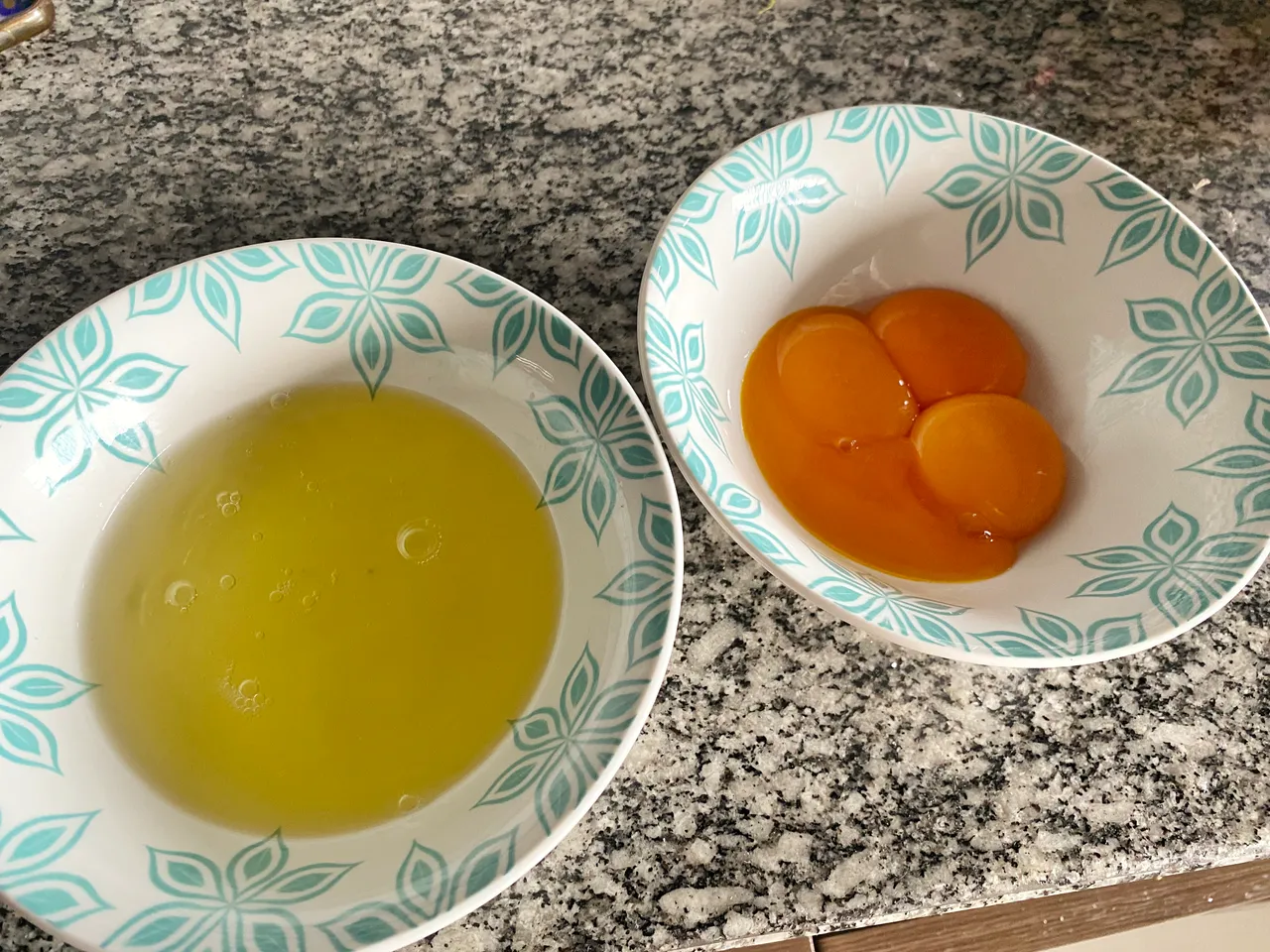
Combinaremos el resto del queso, con la mayor parte de la tocineta, su grasa, y si está muy espesa como en mi caso, le puedes agregar un chorrito de aceite de oliva.
We will combine the rest of the cheese, with most of the bacon, its fat, and if it is very thick as in my case, you can add a drizzle of olive oil.

Con el sartén ya apagado, y esperando unos segundos que el Risotto se enfríe un momento, agregamos la salsa y mezclamos todo constantemente por unos segundos, evitando que la yema se cocine de más.
With the pan turned off, and waiting a few seconds for the Risotto to cool down for a moment, add the sauce and mix everything constantly for a few seconds, preventing the yolk from overcooking.

La forma más sencilla de acompañar este plato sería con un pan tostado con ajo / The easiest way to accompany this dish would be with toasted garlic bread.

Para darle otro toque personal, el ajo lo rostice en el horno junto con un poco de sal y pimienta, obteniendo un ajo con un sabor más sutil y algo dulce, que lo podemos embarrar directamente en el pan sin ningún problema.
To give it another personal touch, I roasted the garlic in the oven together with a little salt and pepper, obtaining a garlic with a more subtle flavor and something sweet, which we can smear directly on the bread without any problem.
