

The cover was made using Canva and Bitmoji. The controller picture was taken from Medium

In previous posts I have already talked about two of the gamepads that I consider the most interesting in the entire history of videogames: The Nintendo 64 controller and Sony's DualShock, today I wanted to go back to Nintendo and talk about another controller that was quite controversial since its announcement in the year.
The Wii Remote is perhaps the epitome of Nintendo's design and development philosophy: innovation at all costs. Introducing the world of motion controllers, the Wii would make its way to a more casual market, which served to become one of the best-selling consoles in all history, fighting against two giants like Xbox 360 and Playstation 3, who oddly enough they had a lot more power, but a slightly less family friendly approach.

From its conception, the Wii remote sought to attract the attention of the whole family, it was not only about attracting lovers of the great Nintendo franchises, but also their parents, grandparents, uncles, brothers ... in short, everyone.
Miyamoto, who was deeply involved in the entire design of the controller, always emphasized how they should erase from their minds any preconceptions of what a control should look like to work on it, and it is something that shows in their design, which resembles more like a tv remote than a traditional gamepad. With a slightly strange layout and the following inputs: 6 buttons at the top: A, 1, 2, +, -, and home, and one at the bottom: B plus a directional cross. The Wiimote Fort was in his movement control, which would make up for the lack of buttons.

On a more personal note I must admit that this gamepad fulfilled its objective, I was hypnotized since I saw it for the first time, it was a striking piece that invited you to take it.
When I had the console, some time later, during its years of life I had mixed sweet and sour experiences, on the one hand the accessibility was great, but it ended up being limited for those more complex titles that were used to traditional control schemes like the one offered by sony. or Microsoft.

I have always felt that the gamepad of the Nintendo 64 and the Nintendo Wii have a very important parallel: versatility. As in 64 depending on who you were to play you could take control in one way or another, for example, if it was sports or shooting games that are executed with one hand, you would use the control in a vertical position, the games more complex that require moving in three dimensions at the same time as manipulating the angle of the camera would use the nunchuck (an accessory that together with the Classic controller require a post on its own), and the simplest games of movement in two dimensions would use the scheme horizontal, which closely resembles the layout of a NES control, with two buttons for action, the middle ones for pause, and the crosshead and a rear trigger and the large A button as an addition.

Apart from the motion controllers that would use the infrared sensor bar that was connected to the console, it had an ADXL330 accelerometer, an integrated speaker that many games took advantage of for greater immersion and a small amount of internal memory to save data in specific games. as well as transporting Miis.

Although everything sounds very nice on paper, and most of Nintendo's first party games fit very well with these various schemes (Special mention to titles like Mario Kart or Super Smash Bros Brawl that were adapted to all of them), third parties suffered a little more this, being forced to use the motion sensors with mixed results, or simply transferring the mechanics of the DualShock, the PC keyboard or the Xbox controller.
I find it a bit funny that after so many years of using the motion sensor that was the main attraction of the console in the first place, it was losing interest in all of us, although no one denies how innovative it was in 2006, the lack of precision and the It was shocking that he felt when faced with more traditional schemes that turned a good gimmick into a weight that affected the last years of the Nintendo Wii's life.

On the other hand, honor to whom honor deserves, the white Nintendo was a jewel of its time that even today is capable of providing hours of non-stop entertainment, games like Wii Sport and Wii Play took much advantage of the limited control possibilities, delivering timeless jewels.
Even on the less conservative side of the Japanese company there were valuable jewels: Monster Hunter, No More Heroes 1 and 2 or Tatsunoko VS Capcom took advantage of the control very well.
As I said before, we cannot ignore the existence of the nunchuck and the classic control, but I feel that there is enough to talk about them for a post of its own. One of the most fascinating aspects of the wii mote has always been the confluence with accessories of all kinds, some much more interesting (and useful) than others.
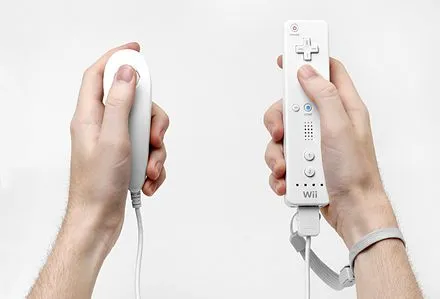
I want to end by saying thatFor many years of my life the Nintendo Wii was my main console, and although I always viewed its HD counterparts with a bit of envy, technical marvels that still continue to impress, within their humble presentation the Wii and its Wiimote gave me a lot of fun, If we get a little philosophical, it could even be said that thanks to them we face the current revolution in the world of video games, not only because they opened the doors to a wider and more casual market (We see the consequences today), but because apart He taught us the value of alternative forms of play, which, beyond following typical designs, allowed us to use our own movement to improve our immersion.
For this reason, despite all its errors the Wiimote is an amazing controller.
Sources:
The Wii's Awful Prototypes, Thomas Game Docs
Previous Chapters:
La portada fue hecha usando Canva y Bitmoji. La imagen del gamepad fue tomada de Medium
En post anteriores ya he hablado de dos de los gamepads que considero más interesantes en toda la historia del videojuego: El control de Nintendo 64 y el DualShock de Sony, hoy quería regresas a Nintendo y hablarles sobre otro controlador que fue bastante polémico desde su anuncio en el año.
El Wii Remote es quizá la epitome de la filosofía de diseño y desarrollo que sigue Nintendo: la innovación a todo costa. Introduciendo al mundo los motion controllers, la Wii se abriría paso frente a un mercado más casual, lo cual le sirvió para convertirse en una de las consolas más vendidas de toda la historia, luchando frente a dos gigantes como Xbox 360 y Playstation 3, quienes curiosamente tenían mucha más potencia, pero un enfoque un poco menos family friendly.
Desde su concepcion el Wii remote buscaba llamar la atención de toda la familia, no se trataba solo de atraer a los amantes de las grandes franquicias de Nintendo, sino a sus padres, abuelos, tíos, hermanos… en fin, a todos.
Miyamoto, quien estuvo profundamente involucrado en todo el diseño del mando, siempre hacía énfasis en cómo debían borrar de sus mentes cualquier preconcepcion de como debía lucir un control para trabajar en el, y es algo que se nota en su diseño, el cual se parece más a un mando de tv que a un gamepad tradicional. Con una layout un poco extraño y los siguientes inputs: 6 botones en la parte superior: A, 1, 2, +, -, y home, y uno en la parte inferior: B más una cruceta direccional. El Fuerte del Wiimote estaba en su control de movimientos, el cual supliría las carencias en cuantía de botones.
En una nota más personal debo admitir que este gamepad cumplió su objetivo, me encontraba hipnotizado dese que lo vi por primera vez, era una pieza llamativa que te invitaba a tomarlo.
Cuando tuve la consola, tiempo después, durante sus años de vida tuve experiencias dulces y amargas mezcladas, por un lado la accesibilidad era genial, pero terminaba siendo limitado para aquellos títulos más complejos que se sentían habituados esquemas de control tradicionales como el que ofrecía sony o Microsoft.
Siempre he sentido que el gamepad del Nintendo 64 y el de Nintendo Wii tienen un paralelismo importantísimo: la versatilidad. Al igual que en el 64 dependiendo de que fueses a jugar podrías tomar el mando de una u otra forma, por ejemplo, si se trataba de deportes o juegos de disparos que se ejecutan con una mano, usarías el control en posición vertical, los juegos más complejos que requirieran moverse en tres dimensiones al mismo tiempo que manipular el ángulo de la cámara usarían el nunchuck (Un accesorio que junto al Classic controller requieren un post por si solos), y los juegos más simples de movimiento en dos dimensiones usarían el esquema horizontal, que se asemeja mucho al layout de un control de NES, con dos botones para acción, los de en medio para pausar, y la cruceta y un gatillo trasero y el botón grande de A como añadido.
Aparte de los motion controllers que se ayudarían de la barra de sensores infrarrojo que se conectaba a la consola, contaba con un acelerometro ADXL330, un altavoz integrado que muchos juegos aprovechaban para mayor inmersión y una cantidad pequeña de memoria interna para guardar datos en juegos específicos así como transportar Miis.
Aunque todo suena muy bonito en papel, y la mayoría de los juegos first party de Nintendo quedan muy bien con estos diversos esquemas (Mención especial a títulos como Mario Kart o Super Smash Bros Brawl que se adaptaban a todos ellos) , los third parties sufrían un poco más esto, viéndose forzados a usar los sensores de movimiento con resultados mixtos, o simplemente trasladando mal mecánicas de el DualShock, el teclado en PC o el mando del Xbox.
Me parece un poco gracioso que luego de tantos años de uso el sensor de movimiento que en primer lugar era el atractivo principal de la consola fue perdiendo interés en todos nosotros, aunque nadie niega lo innovador que resultó en 2006, la falta de precisión y lo chocante que se sentía frente a esquemas más tradicionales convirtieron una buena gimmick en un peso que afectó los últimos años de vida del nintendo Wii.
Por otro lado, honor a quien honor merece, la blanca de Nintendo fue toda una joya de su momento que aun en la actualidad es capaz de brindar horas de entretenimiento sin parar, juegos como Wii Sport y Wii Play le sacaban mucho provecho a las limitadas posibilidades del control, entregando joyas atemporales.
Incluso, en el lado menos conservador de la compañía nipona habían joyas de valor: Monster Hunter, No More Heroes 1 y 2 o Tatsunoko VS Capcom aprovechaban muy bien el control.
Como dije antes, no podemos ignorar la existencia del nunchuck y el control clásico, pero siento que hay suficiente que hablar de ellos para un post propio. Uno de los más aspectos más fascinantes del wii mote siempre fue la confluencia con accesorios de todo tipo, unos mucho más interesantes (Y útiles) que otros.
Quiero finalizar diciendo que durante muchos años de mi vida el Nintendo Wii fue mi consola principal, y aunque siempre veía con un poco de envidia a sus contrapartes HD, maravillas técnicas que aún siguen impresionando, dentro de su humilde presentación el Wii y su Wiimote me dieron muchísima diversión, si nos ponemos un poco filosóficos incluso podría decirse que gracias a ellos enfrentamos la revolución actual en el mundo de los videojuegos, no solo porque abrieran las puertas a un mercado más amplio y casual (Las consecuencias las vemos en la actualidad), sino porque aparte nos enseñó el valor de formas de juego alternativo, que más allá de seguir típicos diseños nos permitían usar el movimiento propio para mejorar nuestra inmersión.
Por esto mismo, a pesar de todos sus errores el Wiimote es un control increíble.
Fuentes:
The Wii's Awful Prototypes, Thomas Game Docs
Capítulos Previos:
Twitter/Instagram: Alxxssss
