

Del director de "Oldboy"
When I decided to watch this movie a couple of weeks ago, I didn't know that the director was Park Chan-wook, one of South Korea's great filmmakers, responsible for two of the best movies I've seen from the other side of the world: the classic contemporary Oldboy and one of my all-time favorite movies, The handmaiden.
Cuando decidí ver esta película hace un par de semanas no sabía que el director era Park Chan-wook, uno de los grandes cineastas de Corea del Sur, responsable de dos de las mejores películas que he visto provenientes del otro lado del mundo: el clásico contemporáneo Oldboy y una de mis películas faavoritas de siempre, The handmaiden.

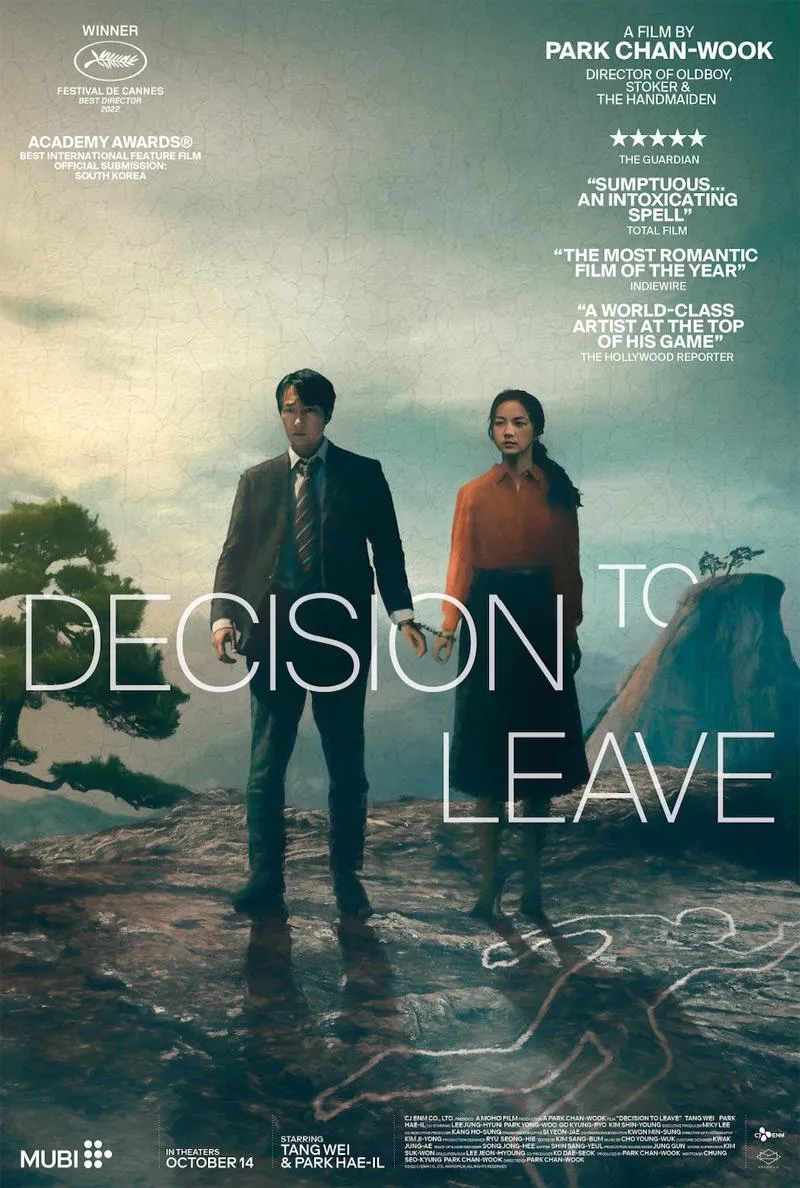
I haven't seen anything by this great film director for a long time and after seeing Decision to leave I want to review other parts of his filmography. The film is a kind of romantic thriller in which Hae-Jun, a veteran police detective begins to investigate the suspicious death of a man who fell from the top of a mountain. It's not the only case that Hae-Jun handles, in fact he is also in the middle of the persecution of a criminal whom he is looking for murder, but the mountaineer case begins to absorb him little by little, especially when he begins to suspect Seo-Rae, the young and beautiful widow of the deceased, who seems to reciprocate the detective's attraction to her, does Seo-Rae's beauty influence the detective's judgment? Was the cause of death really a suicide? Is Seo-Rae's alibi firm? Or, on the contrary, is the young widow guilty? And if so, how did she manage to carry out her plan without any evidence convicting her? Questions begin to arise in our mind.
Hacía tiempo que no veía nada de este gran director de cine y tras ver Decision to leave tengo ganas de repasar otros lugares de su filmografía. La película es una especie de thriller romántico en el que Hae-Jun, un veterano detective de las fuerzas policiales comienza a investigar la sospechosa muerte de un hombre que ha caído desde la cumbre de una montaña. No es el único caso que lleva Hae-Jun, de hecho también se encuentra en medio de la persecución de un criminal a quien busca por asesinato, pero el caso del montañista comienza a absorberlo poco a poco, en especial cuando comienza a sospechar de Seo-Rae, la joven y hermosa viuda del difunto, quien parece corresponder a la atracción que siente el detective por ella, ¿la belleza de Seo-Rae condiciona el juicio del detective? ¿en verdad la causa de muerte fue un suicidio? ¿es firme la coartada de Seo-Rae?, o por el contrario, ¿es culpable la joven viuda? y si es así, ¿cómo logro llevar a cabo su plan sin que ninguna prueba la condenase? Las preguntas comienzan a surgir en nuestra mente.

In order not to spoil too much, the truth is that Seo-Rae is acquitted of the case and Hae-Jun asks to be transferred to another city to be able to live a little more peacefully with his girlfriend. A year passes, everything seems to be going well, until a chance meeting in a popular market hits him with the pain of the past: Seo-Rae.
Para no spoilear demasiado, lo cierto es que Seo-Rae sale absuelta del caso y Hae-Jun pide ser transferido a otra ciudad para poder vivir un poco más tranquilo junto a su novia. Pasa un año, todo parece ir bien, hasta que un encuentro casual en un mercado popular lo golpea con el dolor del pasado: Seo-Rae.

Like Rick in Casablanca when he sees Ilsa Lund arrive at his bar, Hae-Jun asks himself, What is this woman doing here? Memories invade him and seeing the beautiful widow again makes him remember the circumstances in those who met her. The floor shakes and Hae-Jun tries to ignore the encounter until the police station sends him to investigate a murder, the first in the city in a long time, the identity of the dead man? Sae-Rae's new husband, is she guilty? Could it be chance that in two years two couples of the same woman are killed or murdered? who is really Seo-Rae? why does she just appear with her new husband is the same city that Jae-Hun has moved to? There are many questions that arise and the answers are arriving little by little and although they are accompanied by more questions, at the end of the 138 minutes everything becomes clear.
Como Rick en Casablanca cuando ve llegar a Ilsa Lund a su bar, Hae-Jun se pregunta dentro de sí, ¿Qué hace esta mujer aquí? los recuerdos lo invaden y volver a ver a la hermosa viuda lo hace recordar las circunstancias en las que la conoció. El piso se le remueve y Hae-Jun intenta ignorar el encuentro hasta que de la comisaría lo envían a investigar un asesinato, el primero en la ciudad en mucho tiempo, ¿la identidad del muerto? el nuevo esposo de Sae-Rae, ¿es ella culpable? ¿puede ser casualidad que en dos años se mueran o asesinen a dos parejas de la misma mujer? ¿quién es verdaderamente Seo-Rae? ¿por qué justamente aparece con su nuevo esposo es la misma ciudad a la que se ha trasladado Jae-Hun? Son muchas las preguntas que surgen y las respuestas van llegando de a poco y aunque vienen acompañadas de más preguntas, al final de los 138 minutos todo se aclara.

There are several possibilities: if Seo-Rae is innocent and is acquitted, all good; if she is guilty and sentenced, there is justice, but there cannot be love, or at least a relationship between her and the detective (who, by the way, has a partner) could not flourish; the real problem would be the other two alternatives, that she be convicted while innocent or that she be acquitted while guilty. And of these four options, the most likely thing is that two will be presented because statistically it is very unlikely that the same thing happened in the two cases in which you are being investigated, right? It's that ramification of paths, that fine line between love and justice, the dilemma of what is right and what is not; and that mix between romance and thriller, which makes this story entertaining.
Existen diversas posibilidades: si Seo-Rae es inocente y es absuelta, todo bien; si es culpable y condenada, hay justicia, pero no puede haber amor, o por lo menos no podría florecer una relación entre ella y el detective (que por cierto, tiene pareja); el verdadero problema serían las otras dos alternativas, que sea condenada siendo inocente o que sea absuelta siendo culpable. Y de estas cuatro opciones, lo más seguro es que se presenten dos porque estadísticamente es muy improbable que en los dos casos en los que se le investiga haya ocurrido lo mismo, ¿cierto? Es esa ramificación de caminos, esa delgada línea entre el amor y la justicia, el dilema de lo que es correcto y lo que no; y esa mezcla entre romance y thriller, lo que hace que esta historia sea entretenida.
I realize now that I've seen a lot of Asian cinema lately, for one reason or another, and I think there's a lot of talent in Asian productions, especially if you know how to search and start to get to know names like Kim Ki-duk and Park Chan-wook. Although I enjoyed Decision to leave, I would like to recommend the other two stories that I liked by the director above this one: Oldboy for those who like action and The handmaiden for those who want to see a thriller with surprising plot twists, have any of you seen them? What other Park movie do you recommend? I read you in the comments.

Me doy cuenta ahora de que últimamente he visto mucho cine asiático, por alguna razón u otra, y creo que hay muchísimo talento en las producciones de ese país, sobre todo si se sabe buscar y se comienzan a conocer nombres como Kim Ki-duk y Park Chan-wook. Si bien disfruté Decision to leave, aprovecho para recomendarles por encima de esta las otras dos historias que me gustaron del director: Oldboy para quienes gustan de la acción y The handmaiden para quienes quieran ver un thriller con sorprendentes giros de trama, ¿alguno de ustedes las ha visto? ¿qué otra película me recomiendan de Park? los leo en los comentarios.

Other posts that may interest you | Otros posts que pueden interesarte:
 | |
|---|---|
 |