
"Japanese-Style Stir-Fried Carrots 'Kinpira Ninjin'
I made Japanese-style stir-fried carrots called "Kinpira Ninjin (きんぴらにんじん)." Okay, people normally call this "Kinpira Gobou (きんぴらごぼう)" instead of "Ninjin (にんじん)". Let me explain why I used "Ninjin(にんじん)" instead.
"Gobou (ごぼう)" means burdock roots. "Ninjin (にんじん)" means carrots. Usually, people use burdock and carrots for this stir-fry. However, I can't find burdock easily in Nova Scotia, Canada. So, I decided to make stir-fried carrots. That's why I made "Kinpira Ninjin". "Kinpira gobou' needs a pretty long preparation time but "Kinpira ninjin" is easier. "Kinpira gobou" is a traditional Japanese dish often enjoyed at home, typically served in a bento box. It’s perfect for lunch and busy weekday dinners when you want one more thing for the menu. By the way, what does "Kinpira (金平)" mean then?
"Kinpira(金平)" is originally from Japanese traditional music from the Edo period called Kinpira Joururi (Jōruri). The character from the Joururi music show, Sakatano Kinpira (Sakatano Kintoki-Kintarou's son), was tough, strong, and powerful. Burdock is also tough and strong. That's why people started calling it "Kinpira gobo." Nowadays, "Kinpira" means stir-fry and simmering with sugar and soy sauce because of this ancient story.
Jōruri (浄瑠璃) is a form of traditional Japanese narrative music in which a tayū (太夫) sings to the accompaniment of a shamisen. Jōruri accompanies bunraku, a traditional Japanese puppet theater. As a form of storytelling, jōruri emphasizes the lyrics and narration rather than the music itself. https://ja.wikipedia.org/wiki/%E6%B5%84%E7%91%A0%E7%92%83
"きんぴらにんじん”
きんぴらにんじんを作りました。通常のきんぴらには、ごぼうとにんじん両方入っていると思います。きんぴらごぼうではなくなぜきんぴらにんじんなのかというと、カナダのノバスコシア州では近所でごぼうが手に入らないのです。にんじんは豊富にあるのでにんじんのきんぴらを作ることにしました。ごぼうなしは準備も簡単です。きんぴらは日本では伝統的な家庭料理です。弁当のおかずとしても人気がありますね。ところで、きんぴらの語源は何でしょうか?
きんぴらは江戸時代に流行した金平浄瑠璃にちなんでいるようです。金太郎で有名な坂田金時(さかたのきんとき)の子供として設定された、怪力で勇敢な人物である坂田金平(さかたのきんぴら)の武勇伝で、そこから丈夫で強く荒々しいものを「きんぴら」と呼ぶようになったそうです。ごぼうはとても強い植物ですね。現代ではきんぴらとはせん切りにした野菜を砂糖・醤油を用い甘辛く炒めたものの事を言います。
浄瑠璃(じょうるり)は、三味線を伴奏楽器として太夫が詞章(ししょう)を語る音曲・劇場音楽である。詞章が単なる歌ではなく、劇中人物のセリフやその仕草、演技の描写をも含み、語り口が叙事的な力強さを持つ。このため浄瑠璃を口演することは「歌う」ではなく「語る」と言い、浄瑠璃系統の音曲をまとめて語り物(かたりもの)と呼ぶ。江戸時代初期以降、個々の太夫の口演が「――節」と呼ばれるようになり、その後流派として成立して、現在は義太夫節[注 1]・河東節・一中節・常磐津節・富本節・清元節・新内節・宮薗節(薗八節)の8流派が存在する。単独で素浄瑠璃として演じられるほか、流派によっては人形劇である人形浄瑠璃として(文楽など)、歌舞伎音楽として、日本舞踊の伴奏として演じられる(流派ごとの上演形態については後述)。https://ja.wikipedia.org/wiki/%E6%B5%84%E7%91%A0%E7%92%83

Ingredients
・Carrots 3-4
・Sesame oil 2-3 tablespoons
・Cooking sake 3 tablespoons
・Mirin (Sweet sake) 3 tablespoons
・Soy sauce 2 tablespoons
・Hondashi or Bonita dashi 2 teaspoons
・Roasted sesame seeds to taste
・Sugar 1-2 teaspoons
・Red pepper (if you like spicy taste) to taste
材料
・にんじん 3−4本
・ごま油 大さじ2−3
・料理酒 大さじ3
・みりん 大さじ3
・しょうゆ 大さじ2
・ほんだしまたは他のだし 小さじ2
・いりごま 少々
・砂糖 小さじ1−2
・鷹の爪(辛いのが好きな方)少々
(Total cooking time around 30 minutes including preparation time. 準備時間を含め調理時間約30分程度)

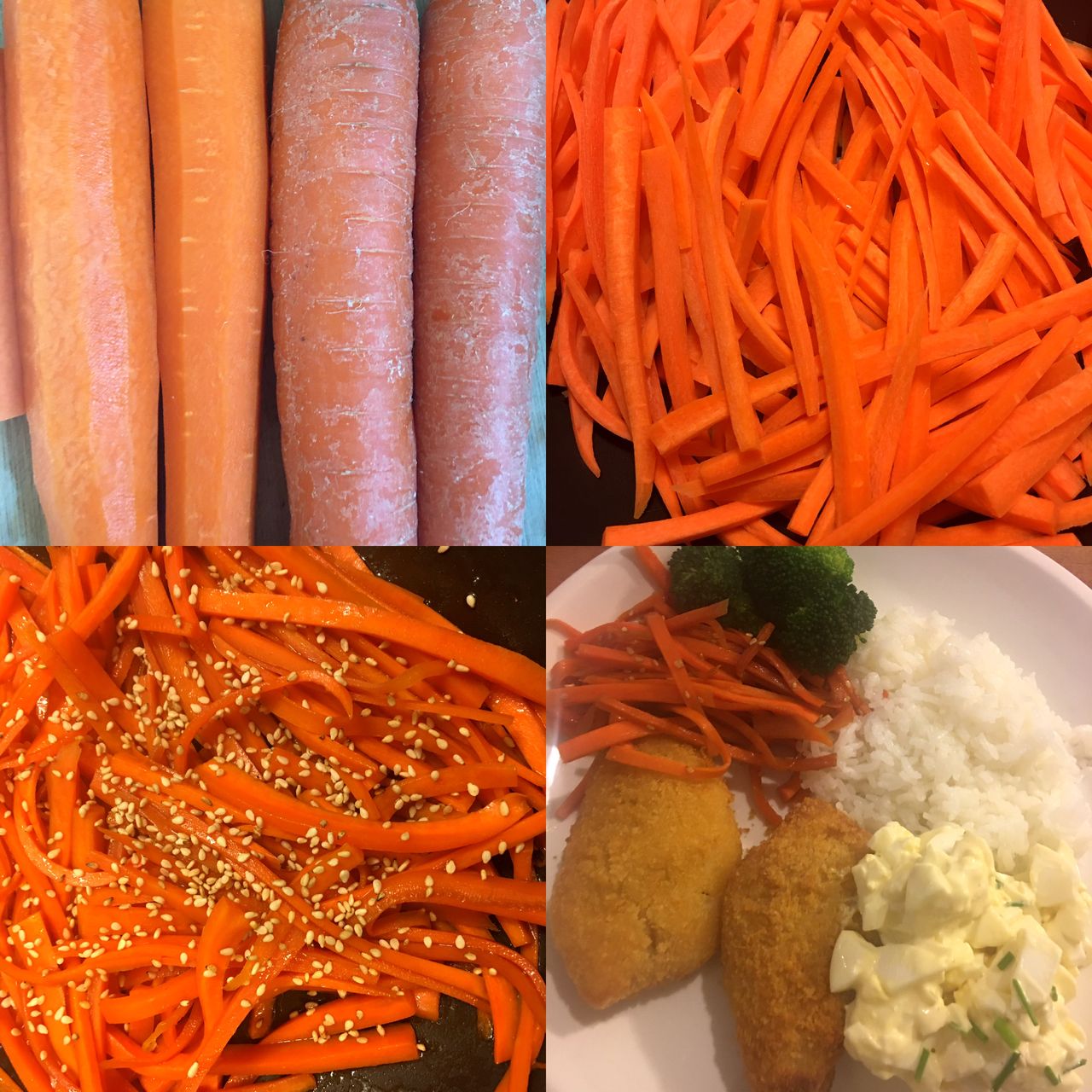
- Wash, peel, and shred carrots.
- Cook carrots in a pan with sesame oil at medium heat for a few minutes.
1. にんじんを洗って皮をむいてせん切りにする。
2. ごま油をフライパンにひいて中火でにんじんを数分炒める。

- Pour cooking sake, mirin(sweet sake), hondashi, sugar, and soy sauce into the pan with cooked carrots at low heat for a while.
- Spread some sesame seeds on top of the carrots.
- Stop heating before becoming too soft. The crunchy texture makes it yummier.
1. 料理酒、みりん、ほんだし、砂糖としょうゆを入れてしばらく弱火で炒める。
2. いりごまをにんじんの上にまぶす。
3. やわらかくなりすぎる前に火を止める。ちょっと歯応えがある感覚が残っている方が美味しいです。
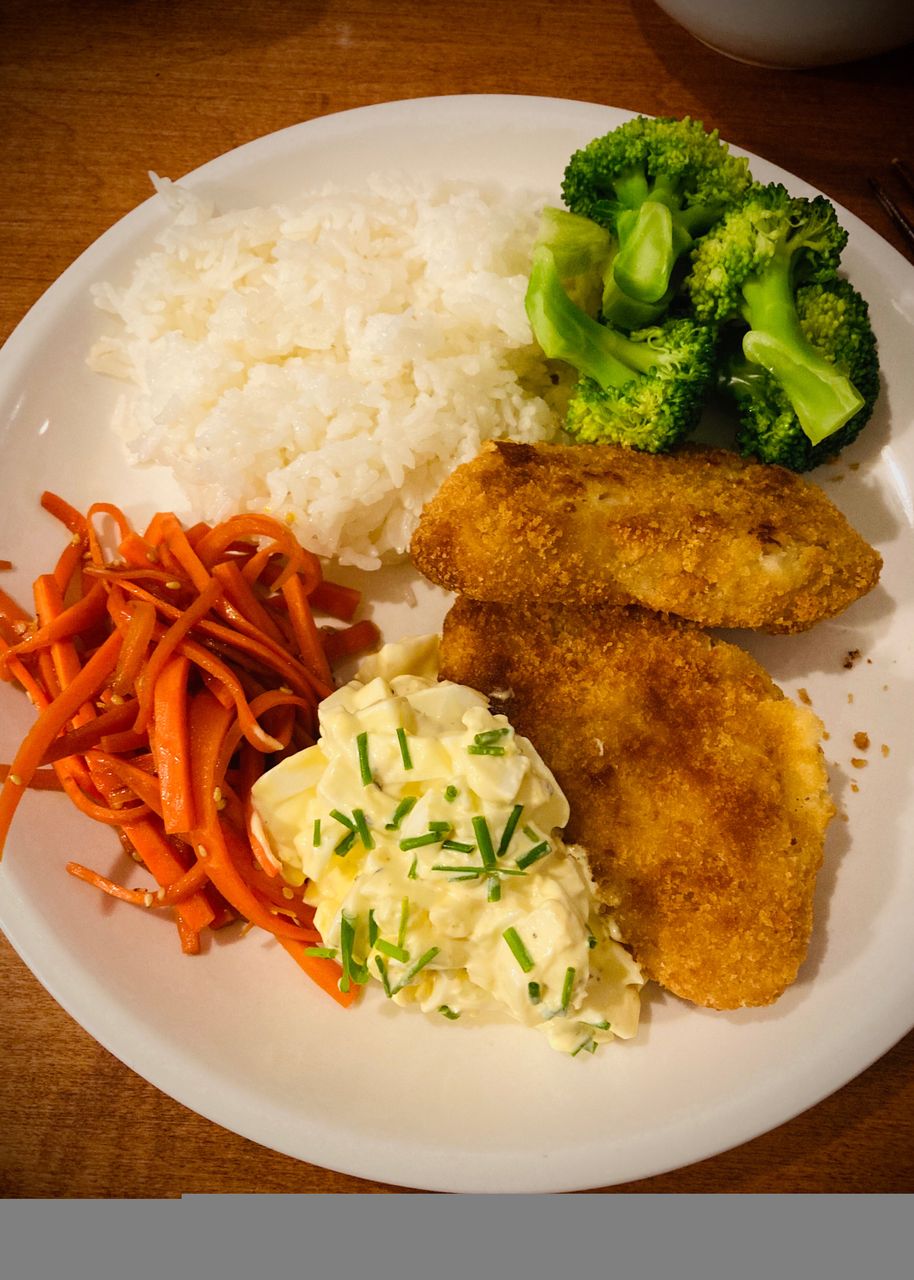
I had it with rice, fried fish, and vegetables. Leftovers are even yummier.
きんぴらにんじんをおかずにご飯、魚、野菜といっしょに食べました。次の日は味が染みてさらにおいしかったです。
・About Kinpira きんぴらについてはコチラ:https://en.wikipedia.org/wiki/Kinpira
・About Jo(u)ruri 浄瑠璃についてはコチラ:
https://ja.wikipedia.org/wiki/%E6%B5%84%E7%91%A0%E7%92%83
