

This recipe was inspired by one I saw on social media, which really piqued my curiosity. How is the sago shaped in a bowl, topped with coconut milk sauce, and then steamed? This dish is similar to kue nona manis, a traditional Indonesian cake, but I've never tried making it before. I will definitely try making it another time. This dish itself is a sweet dessert that is perfect as a takjjil idea, so I ventured to try making it.

It is known as a Thai-style dessert because it is made from Thai sago. I don't know for sure why this Thai sago is known as Thai sago, whether it really comes from there or not. What I do know is that this sago is smaller in size than the sago I usually see at the market. This sago is not easy to find; I usually buy it in the central city of our region, where it is very difficult to obtain. Coincidentally, yesterday when I was shopping for baking supplies, I bought half a kilogram of this sago. I intended to use it to make this special Thai-style dessert.
Curious about the preparation? Let’s take a look at the step-by-step process.
Ingredients Needed

Food coloring as needed
5 tablespoons of granulated sugar
¼ teaspoon of salt
Water as needed

1 tablespoon of granulated sugar
¼ teaspoon of salt
200 ml of coconut milk
Procedure
Divide the sago into 3 equal-sized bowls, then add granulated sugar and salt to all of them.


Add food coloring to each bowl; I used red, yellow, and purple. Then stir until well mixed. Don't forget to add water until the sago is submerged, then let it sit until the sago expands.


Once it has expanded, drain the excess water, then add it to the mold. Don't forget to grease it with oil.


Then make a small hole in the center and set it aside.


Prepare the filling by mixing all the ingredients, stirring, and cooking until thickened.


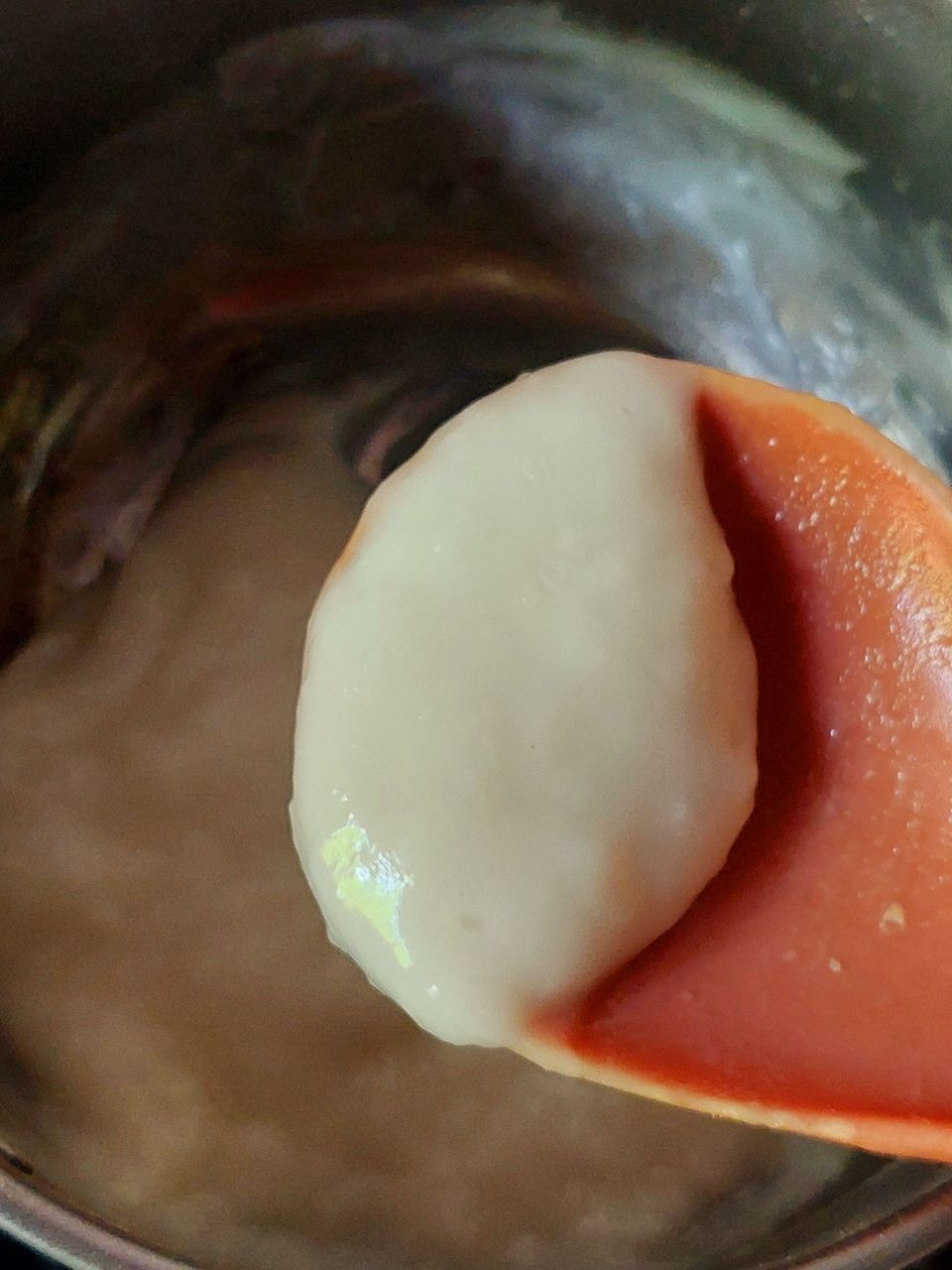
Let it cool slightly, add it to a plastic bag, then add it to the Thai sago dough.


Steam until cooked, approximately 20 to 30 minutes, until the sago expands perfectly.


Result

Once cooked, I let it cool slightly before removing it from the mold. Make sure the mold is greased with oil so that the cake is easy to remove. The texture of this cake is chewy and very soft in the filling. This sweet cake is indeed most suitable as a dessert and can be served cold or at room temperature, both of which are equally delicious.
 |  |  |
|---|
The color variations are very vibrant; you can choose your favorite color, and they all look beautiful. The taste is also undeniably delicious—sweet and perfect. I love how the sago is chewy and not overly sweet; it’s just right for my taste buds. This first attempt was perfect. I will save this recipe and make it again.


About The Author
Welcome to this blog, I have a real name "Nurul", who comes from Indonesia. I have several hobbies, reading, writing, gardening, I also love food and cooking, even art related. And the most interesting one is spending the whole day traveling. From those hobbies, I will share some inspiring content for all of you, I hope you like my blog, please and reblog this post if you like it!.
Steamed Green Bean Cake for Birthday Celebration
Dragon Fruit Stuffed Cassava Balls
Classic Corn Vermicelli Putu with Aren Sugar Sauce
Coconut Milk Sticky Dragon Fruit Balls